18 Types of Facebook Ads: Complete Guide to Formats, Use Cases, and Examples
- Author
- PrimeSpy Research Team
- Published
- Jun 23, 2026
- Updated
- Jul 1, 2026

Summary: This blog helps you understand the 18 main types of Facebook ads, when to use each format, and how to match ad types with goals like awareness, leads, ecommerce sales, retargeting, and app installs.
Choosing between the different types of Facebook ads can feel simple at first. You pick an image, write a line of copy, add a button, and launch. Then Meta Ads Manager asks about campaign objectives, placements, audiences, product catalogs, Advantage+ settings, and half a dozen creative formats.
That is where many campaigns go sideways. The problem is not that the ad looks bad. The problem is that the format does not match the goal.
An image ad can work beautifully for a simple offer. A carousel ad can sell a product range better than one static post. A lead ad can remove landing page friction. A dynamic ad can bring back shoppers who left items in their cart. None of these formats is “best” on its own. The best Facebook ad type depends on your audience, offer, funnel stage, creative assets, and conversion goal.
This guide breaks down 18 types of Facebook ad formats, when to use each one, and how to match them to real business goals such as awareness, traffic, lead generation, ecommerce sales, retargeting, and repeat purchases.
What are Facebook Ads?
Facebook ads are paid placements that businesses create and manage through Meta Ads Manager. They can appear across Facebook Feed, Stories, Reels, Marketplace, search results, video feeds, Messenger, Audience Network, and, when selected, Instagram placements.
Most Facebook ads combine four basic parts:
- Creative: the image, video, carousel, collection, or other visual format
- Copy: the primary text, headline, description, and call to action
- Audience: the people Meta is asked to reach
- Objective: the result the campaign is optimized for
That last point matters. A Facebook ad is not just a design format. Meta also needs to know what you want the campaign to do.
Facebook Ad Formats Vs. Objectives Vs. Placements
Before choosing an ad type, separate three ideas that often get mixed together.
| Term | What It Means | Example |
| Ad Format | How the ad is presented | Image, video, carousel, collection |
| Campaign Objective | What Meta optimizes for | Awareness, traffic, leads, sales |
| Placement | Where the ad appears | Feed, Reels, Stories, Messenger |
For example, you could run a video ad with a sales objective in Facebook Feed. You could also run a video ad with an awareness objective in Reels. The format is the same broad category, but the campaign behaves differently because the goal and placement changed.
Meta campaign objectives commonly include awareness, traffic, engagement, leads, app promotion, and sales. Pick the objective first. Then choose the ad format that gives that objective the best chance of working.
18 Main Types of Facebook Ads
1. Image Ads
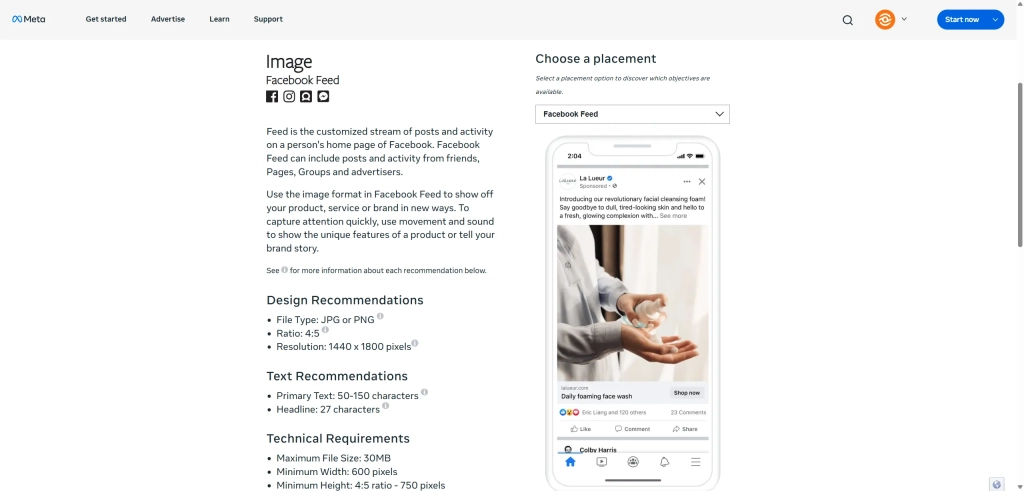
Image ads are the simplest Facebook ad format: one image, a short message, and a call to action. They are easy to create, quick to test, and useful when the offer is easy to understand.
Use image ads for product promotions, local offers, brand awareness, retargeting, and simple website traffic campaigns. They work best when the image carries the point without needing much explanation.
Good image ads usually do one thing well. They show the product clearly, name the benefit, and send people to a relevant landing page. If someone has to read a wall of text to understand the ad, the format is probably doing too much work.
2. Video Ads
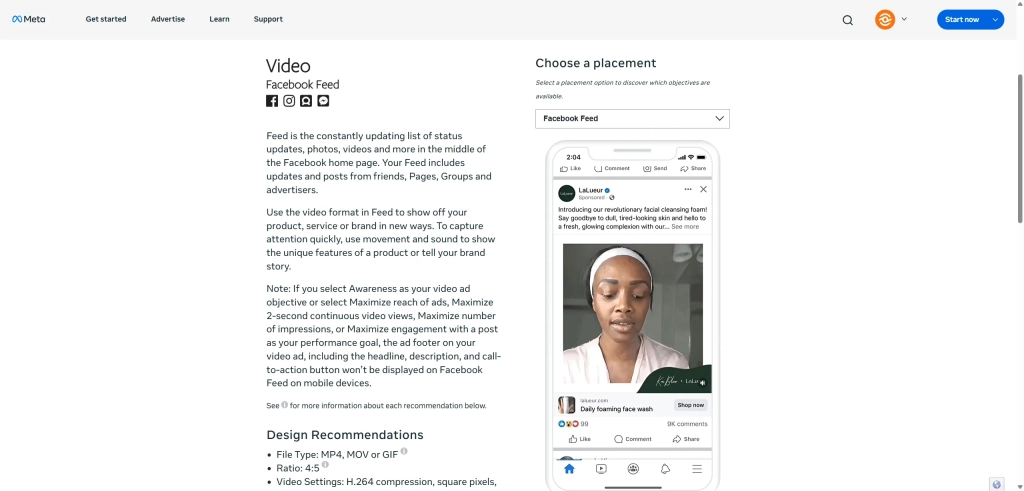
Video ads use motion, sound, captions, and pacing to explain an offer or make a product feel more real. They are useful for product demos, founder stories, testimonials, tutorials, customer proof, and problem-solution angles.
The first few seconds matter. A good video ad does not warm up slowly. It shows the product, names the problem, asks a direct question, or opens with a clear visual hook.
Use captions, design for mobile, and assume many people will watch without sound. Keep one main idea per video. If you need to explain five benefits, test five short videos instead of cramming all five into one.
3. Carousel Ads
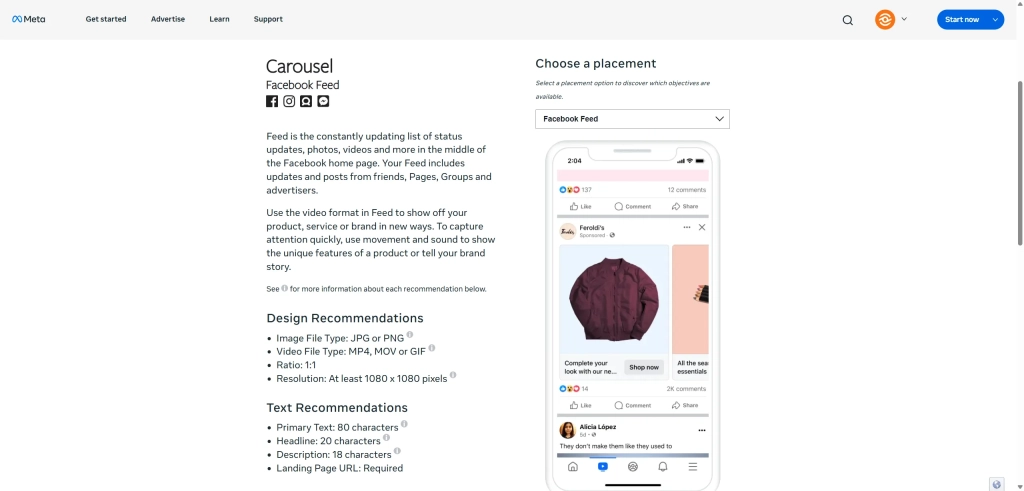
Carousel ads let you show multiple images or videos in one ad. Each card can have its own headline, description, and link.
This format is strong when one visual is not enough. Use carousel ads to show a product collection, compare features, walk through a process, tell a step-by-step story, or show different use cases for the same product.
For ecommerce, carousel ads are especially useful because shoppers can browse several products without leaving Facebook. Put the strongest card first, keep the visual style consistent, and give each card a job.
4. Collection Ads
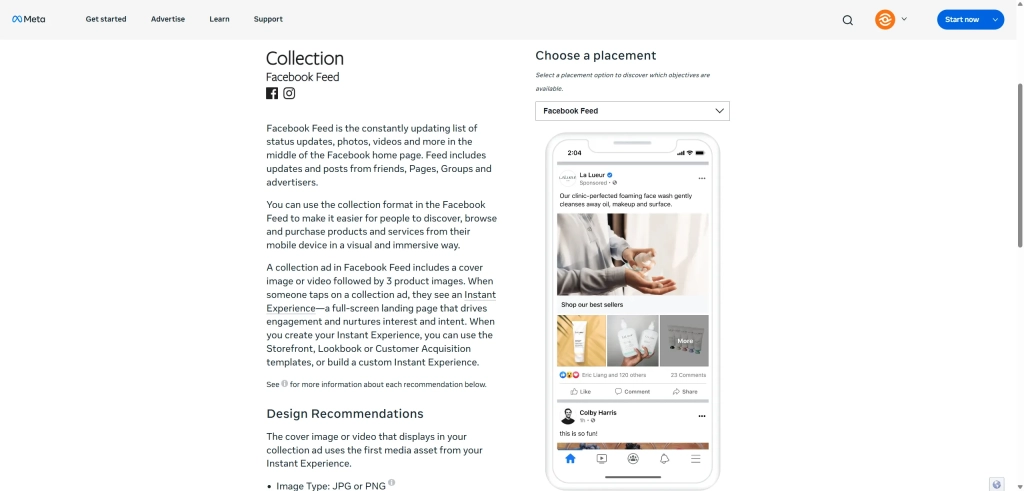
Collection ads are built for mobile shopping. They usually show a main image or video above a set of product tiles. When someone taps the ad, they can browse a fuller product experience inside Facebook.
Use collection ads for ecommerce sales, product discovery, seasonal campaigns, bundles, lookbooks, and catalog-driven promotions.
This format works best when your product catalog is clean and your hero creative gives people a reason to tap. Think of the ad as a mini storefront, not just another product post.
5. Instant Experience Ads
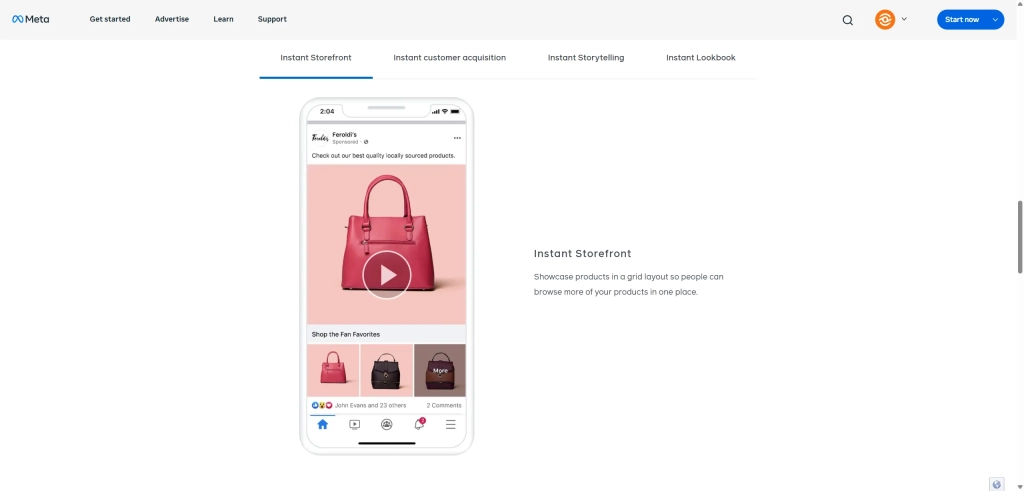
Instant Experience ads open a fast, full-screen mobile experience after someone taps the ad. They can include images, videos, carousels, product sets, text, and buttons.
Use Instant Experience for product launches, brand storytelling, lookbooks, mobile landing experiences, and campaigns where a normal landing page feels too slow or too thin.
The best versions feel focused. Do not add every possible section just because the format allows it. Build a short path: hook, proof, product, next step.
6. Lead Ads
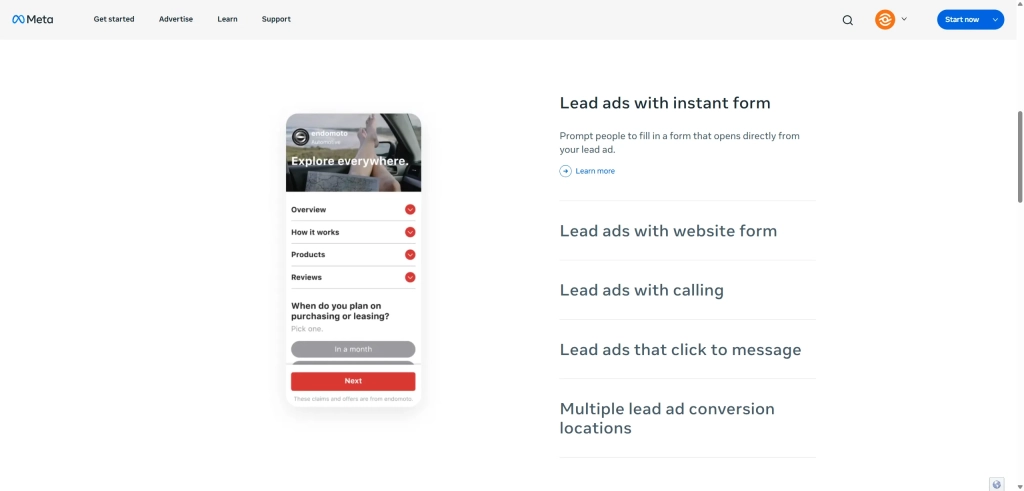
Lead ads collect contact information inside Facebook. Instead of sending people to an external form, the ad opens a native lead form, often pre-filled with information from the user’s profile.
Use lead ads for demo requests, quote requests, consultation bookings, newsletter signups, waitlists, event registrations, and local service inquiries.
Lead ads reduce friction, but that can be a mixed blessing. You may get more leads and lower lead costs, but quality can drop if the form is too easy. Add one or two qualifying questions when quality matters, and connect the form to your CRM or email automation so follow-up happens quickly.
7. Dynamic Ads
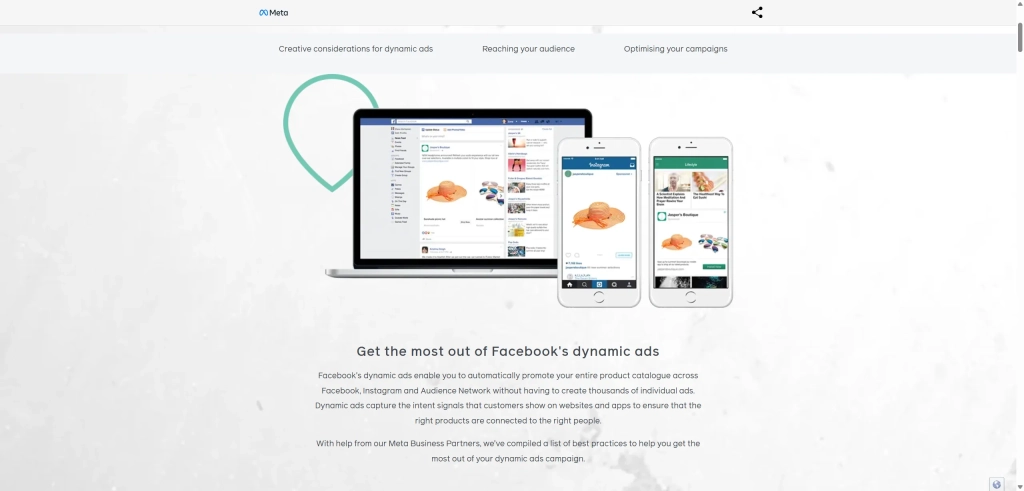
Dynamic ads use a product catalog to show personalized products based on user behavior. They are common in ecommerce retargeting because Meta can show people items they viewed, added to cart, or might be likely to buy.
Use dynamic ads for abandoned cart recovery, viewed-but-not-purchased audiences, upsell campaigns, cross-sell campaigns, and large product catalogs.
Dynamic ads need clean tracking and catalog data. Set up the Meta Pixel or Conversions API, keep product feeds accurate, and segment audiences by behavior. A cart abandoner should not always see the same message as someone who browsed one product for five seconds.
8. Stories Ads
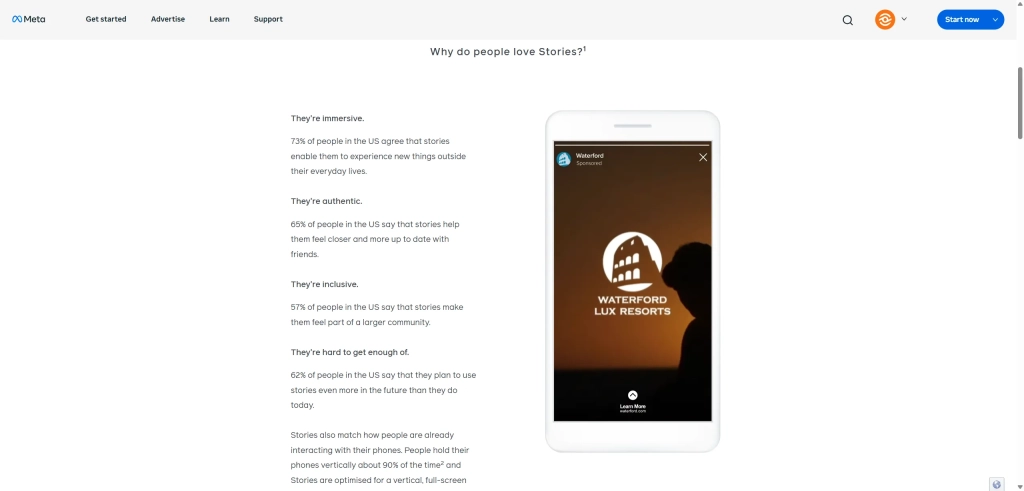
Stories ads appear in a vertical, full-screen format between user Stories. They are built for quick mobile attention.
Use Stories ads for flash sales, behind-the-scenes content, creator-style videos, product teasers, limited-time offers, and mobile-first awareness campaigns.
Stories creative should feel native to the placement. Use 9:16 visuals, short copy, motion, and a clear call to action. A square feed ad squeezed into Stories usually looks lazy.
9. Reels Ads
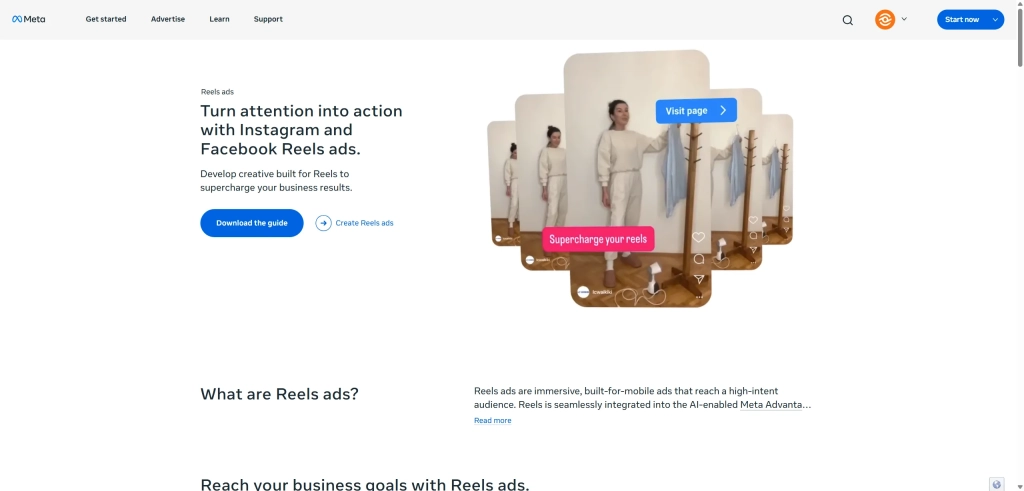
Reels ads appear in short-form video environments where people expect fast, casual, entertaining content. This makes them useful for discovery, especially when the creative feels more like native content than a polished commercial.
Use Reels ads for UGC-style product videos, quick demos, creator-led campaigns, founder clips, before-and-after stories, and top-of-funnel awareness.
The format rewards speed and clarity. Lead with the hook, show the product early, and avoid long intros. Reels is not the place to slowly build suspense unless the payoff is worth it.
10. Messenger Ads
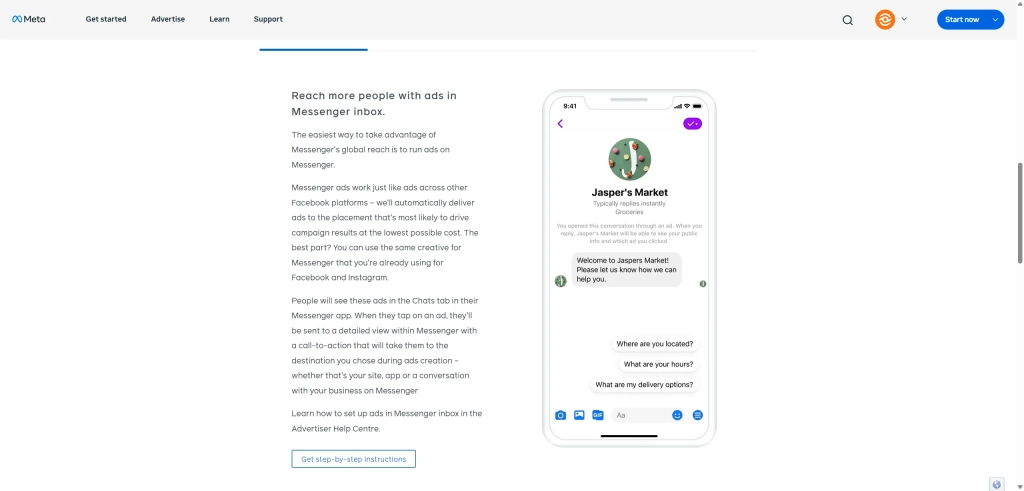
Messenger ads encourage people to start a conversation with your business. They can appear in Messenger placements or use click-to-message calls to action from other placements.
Use Messenger ads for local services, high-consideration purchases, lead qualification, customer support, appointment booking, and sales conversations.
Have a reply plan before launching. If the ad invites people to message you and nobody responds for hours, the campaign loses momentum. Automated replies can help, but the conversation should still feel useful.
11. Slideshow Ads
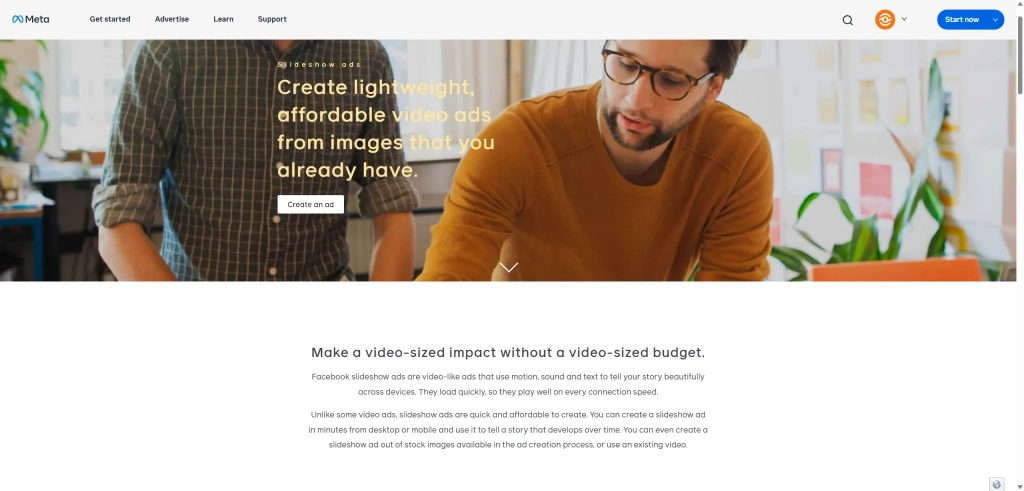
Slideshow ads turn a series of images into a lightweight video-style ad. They are helpful when you do not have video production resources but still want motion.
Use slideshow ads for simple product stories, low-budget creative testing, markets with slower connections, and repurposing high-performing image assets.
Keep the sequence tight. A slideshow should feel like a clear visual progression, not a folder of product images stitched together.
12. Poll Ads
Poll ads invite people to answer a simple question. They are usually used for engagement and audience feedback rather than direct sales.
Use poll ads to test product preferences, ask about styles or flavors, get audience input, or create a lightweight interaction around a campaign.
The question should connect to the offer. “Which color would you wear?” is useful for a fashion brand. A random question that has nothing to do with the product may get clicks but little insight.
13. Augmented Reality Ads
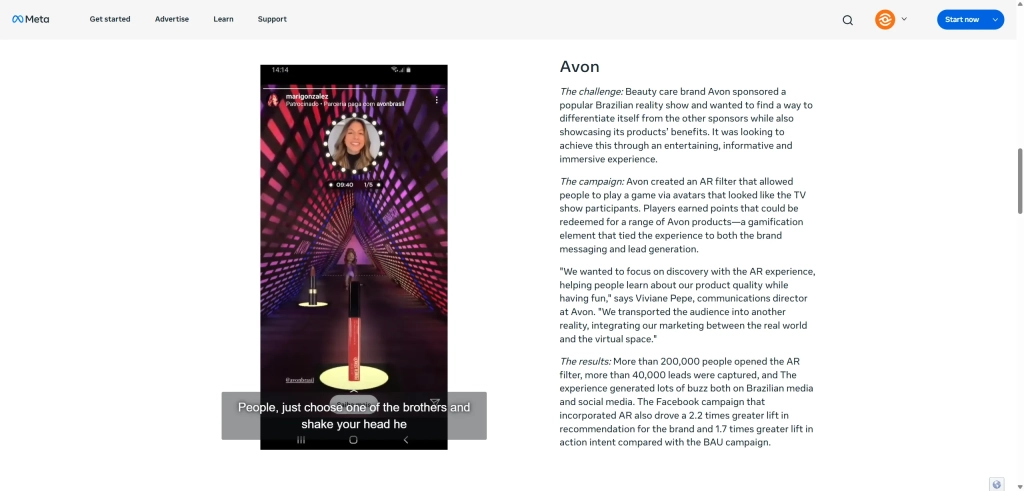
Augmented reality ads let people interact with a product through their phone camera. They are most useful when trying the product virtually helps the buying decision.
Use AR ads for beauty, eyewear, fashion, accessories, home decor, and try-before-you-buy experiences.
AR should not be used as a gimmick. If the interaction helps someone see fit, color, scale, or style, it can be powerful. If it only exists because it looks novel, the budget may be better spent on video or collection ads.
14. Offer Ads
Offer ads promote a specific deal, discount, or incentive. They work well when the audience already has some interest and needs a reason to act now.
Use offer ads for limited-time discounts, seasonal sales, first-order incentives, store visits, bundle deals, and retargeting campaigns.
Make the offer specific. “Save 20% this weekend” is clearer than “special deal available now.” Explain how to redeem it, when it ends, and what product or category it applies to.
15. Event Ads
Event ads promote online or offline events. They can help drive interest, registrations, reminders, and attendance.
Use event ads for webinars, workshops, local events, product launches, live shopping sessions, open houses, and community events.
The creative should answer three questions fast: what is happening, when is it happening, and why should someone care?
16. App Install Ads
App install ads are designed to drive downloads or app actions. They are used by mobile apps, games, SaaS apps, marketplaces, and consumer products with mobile experiences.
Use app install ads when the app experience itself is the product. Show the interface, the main benefit, and the moment where the app becomes useful.
For better optimization, track not only installs but also in-app events such as signups, purchases, subscriptions, or completed onboarding.
17. Page Like Ads
Page Like ads are designed to grow followers for a Facebook Page. They can help build social proof, but they are usually less valuable than campaigns optimized for leads, sales, or meaningful engagement.
Use Page Like ads only when Page growth supports a broader strategy. For most businesses, budget is better spent on campaigns tied to traffic, leads, retargeting, or purchases.
18. Boosted Posts
Boosted posts are promoted versions of existing Facebook posts. They are easy to launch and can be useful for quick engagement, but they offer less control than full campaigns built in Meta Ads Manager.
Use boosted posts to amplify a strong organic post, promote a quick announcement, or test lightweight awareness. Do not rely on boosted posts as your only Facebook advertising strategy if you need structured testing, tracking, and conversion optimization.
Best Facebook Ad Types by Business Goal
| Goal | Strong Ad Types To Test |
| Brand Awareness | Video, Reels, Stories, Image, AR |
| Website Traffic | Image, Video, Carousel, Boosted Posts |
| Lead Generation | Lead Ads, Messenger Ads, Video Ads |
| Ecommerce Sales | Dynamic, Collection, Carousel, Offer, Product Video |
| Retargeting | Dynamic, Carousel, Collection, Offer, Messenger |
| Local Businesses | Lead, Messenger, Offer, Event, Image |
| B2B | Lead, Video, Messenger, Image, Retargeting |
| Mobile Apps | App Install, Video, Reels, Playable-Style Creative |
Use this table as a starting point, not a rulebook. Your audience, offer, price point, and creative quality will decide what wins.
Facebook Ad Placements to Know
Facebook ad placements include Facebook Feed, Stories, Reels, Marketplace, search results, video feeds, in-stream video, right column, Messenger Inbox, Messenger Stories, Audience Network, and Instagram placements when selected through Meta.
Automatic or Advantage+ placements can help Meta find efficient inventory, especially when you have enough creative variations. Still, placement matters. A Feed ad, Reels ad, and Stories ad should not always use the same asset. Resize, rewrite, and reframe creative for the environment where it will appear.
How to Choose the Right Facebook Ad Type
Start With Your Campaign Goal
If the goal is awareness, lead with formats that stop the scroll: video, Reels, Stories, and strong image ads.
If the goal is leads, test lead ads, Messenger ads, and video ads with a clear lead magnet or consultation offer.
If the goal is ecommerce sales, test dynamic ads, collection ads, carousel ads, offer ads, and product-focused video.
Match The Format To The Funnel Stage
Top-of-funnel audiences usually need education, entertainment, or a simple reason to care. Video, Reels, Stories, and image ads often fit.
Middle-of-funnel audiences need more context. Carousel, collection, Instant Experience, and lead ads can help.
Bottom-of-funnel audiences need relevance and a reason to act. Dynamic ads, offer ads, Messenger ads, and retargeting campaigns are strong options.
Consider Product Complexity
Simple product? Start with image ads, carousel ads, and offer ads.
Visual product? Test video ads, collection ads, Stories, and Reels.
High-consideration product? Use video ads, lead ads, Messenger ads, and retargeting.
Large catalog? Dynamic ads, collection ads, and carousel ads should be high on the list.
Use the Creative Assets You Already Have
If you have product photos, start with image, carousel, and slideshow ads. If you have videos, test video, Reels, and Stories. If you have a product feed, test dynamic and collection ads. If you have customer reviews, turn them into image, carousel, and video ads.
The best format is often the one you can support with strong creative, clean tracking, and enough variations to test.
Quick Comparison Table
| Facebook Ad Type | Best For | Funnel Stage | Difficulty |
| Image Ads | Simple offers and traffic | Top/Middle | Easy |
| Video Ads | Education and storytelling | Top/Middle | Medium |
| Carousel Ads | Multiple products or features | Middle/Bottom | Easy-Medium |
| Collection Ads | Ecommerce product discovery | Middle/Bottom | Medium |
| Instant Experience Ads | Mobile brand or product journeys | Middle | Medium |
| Lead Ads | Capturing leads | Middle/Bottom | Easy |
| Dynamic Ads | Catalog retargeting | Bottom | Medium |
| Stories Ads | Mobile-first awareness | Top/Middle | Easy-Medium |
| Reels Ads | Short-form discovery | Top | Medium |
| Messenger Ads | Conversations and qualification | Middle/Bottom | Medium |
| Slideshow Ads | Lightweight video alternative | Top/Middle | Easy |
| Poll Ads | Engagement and research | Top | Easy |
| AR Ads | Try-before-buy experiences | Top/Middle | Hard |
| Offer Ads | Discounts and promotions | Bottom | Easy |
| Event Ads | Registrations and attendance | Middle | Easy |
| App Install Ads | Mobile app growth | Top/Bottom | Medium |
| Page Like Ads | Page growth | Top | Easy |
| Boosted Posts | Quick engagement | Top | Easy |
Facebook Ad Creative Best Practices
- Design for mobile first.
- Put the hook early.
- Use one message per ad.
- Match the creative to the landing page.
- Show the product in context.
- Use reviews, ratings, testimonials, or real customer language when available.
- Write a clear call to action.
- Build separate assets for Feed, Stories, and Reels.
- Refresh creative before ad fatigue drags down performance.
- Judge ads by business outcomes, not clicks alone.
- Creative testing usually works best when you test big ideas first: offer, angle, audience, hook, and format. Button color can wait.
Common Facebook Ad Mistakes to Avoid
The most common mistake is choosing a format before choosing a goal. That leads to pretty ads that do not know what job they are supposed to do.
Other mistakes include using the same creative across every placement, sending traffic to a slow landing page, asking too many questions in lead forms, ignoring retargeting, failing to set up the Meta Pixel or Conversions API, scaling before there is enough data, relying only on boosted posts, and measuring clicks instead of revenue, lead quality, CPA, or ROAS.
Facebook ads are not won by the format alone. They are won by the match between audience, offer, creative, tracking, and follow-up.
FAQs about Types of Facebook Ads
What are the Main Types of Facebook Ads?
The main types of Facebook ads include image ads, video ads, carousel ads, collection ads, Instant Experience ads, lead ads, dynamic ads, Stories ads, Reels ads, Messenger ads, slideshow ads, poll ads, AR ads, offer ads, event ads, app install ads, Page Like ads, and boosted posts.
What is the Best Type of Facebook Ad?
There is no single best type of Facebook ad. Video ads are strong for awareness, lead ads work well for capturing contact information, dynamic ads are useful for retargeting, and collection or carousel ads are often strong for ecommerce.
Which Facebook Ad Type is Best for Beginners?
Image ads, video ads, carousel ads, and lead ads are usually the easiest starting points. They are simple to understand, easy to test, and useful across many business types.
Which Facebook Ad Format Works Best for Ecommerce?
Dynamic ads, collection ads, carousel ads, offer ads, and product video ads are often the strongest ecommerce formats. They help shoppers browse products, return to abandoned carts, and discover related items.
What is the Difference Between Carousel Ads and Collection Ads?
Carousel ads show multiple cards that users can swipe through. Collection ads show a main image or video with product tiles and open into a more immersive shopping experience. Carousel ads are flexible. Collection ads are more ecommerce-focused.
What is the Difference Between Boosted Posts and Facebook Ads?
Boosted posts promote existing organic posts with limited setup. Facebook ads created in Meta Ads Manager give you more control over objectives, audiences, placements, creative testing, tracking, and optimization.
Are Facebook Lead Ads Effective?
Facebook lead ads can be effective when the offer is clear and follow-up is fast. They often reduce form friction, but lead quality depends on your questions, targeting, and sales process.
Which Facebook Ad Type is Best for Retargeting?
Dynamic ads are often best for ecommerce retargeting because they can show products based on user behavior. Carousel ads, collection ads, offer ads, and Messenger ads can also work well for warm audiences.
Can Facebook Ads also Run on Instagram?
Yes. Meta Ads Manager can place ads across Facebook and Instagram when those placements are selected. Creative should still be adapted for each placement, especially Reels and Stories.
How Many Facebook Ad Types Should I Test at Once?
Start with two or three formats that match your goal. For example, an ecommerce brand might test video ads for awareness, carousel ads for product discovery, and dynamic ads for retargeting. Add more formats once you know what is working.
Conclusion
The best Facebook ad type is the one that fits the job.
Start with the campaign goal, match the format to the funnel stage, build creative for the placement, and measure the result that actually matters. That is how Facebook ad formats become a system, not just a list.