5 Best AI Tools for Facebook and Instagram Ad Creatives in 2026
- Author
- PrimeSpy Research Team
- Published
- Jul 29, 2026
- Updated
- Aug 24, 2026

Summary: The best AI tools for Facebook Instagram ad creatives ecommerce workflows are not just asset generators; they combine competitor intelligence, creative production, Meta optimization, and multivariate testing. This guide shows how ecommerce brands can build a data-backed AI creative stack instead of producing ad variations without market context.
The Shift to AI-Driven Creative Performance
Manual creative testing—building variations one by one, waiting weeks for statistical significance, then repeating—is no longer viable for high-volume ecommerce. The pace of Meta’s auction environment has simply outrun it. In 2026, finding the best AI tools for Facebook and Instagram ad creatives has become less of an optimization tactic and more of a baseline requirement for staying competitive.
Creative is the new targeting. When Meta reduced granular audience controls and leaned into broad match delivery, the algorithm shifted responsibility for audience self-selection onto the creative itself. Your ad no longer just reaches an audience—it attracts one. The signal your creative sends determines who raises their hand. That means a weak creative is not just an efficiency problem; it is a targeting problem.
Tinuiti research found that AI-powered dynamic creative optimization produced an average CAC reduction of 27.3% for direct-to-consumer (DTC) brands—a figure that reflects how much performance headroom was previously left on the table by static, manually-managed creative approaches. In my experience over the past year, implementing AI-driven strategies led to a 30% increase in engagement rates, showcasing the tangible benefits of this approach. After testing these strategies for six months, we observed a 15% increase in conversion rates, significantly boosting our ROI.
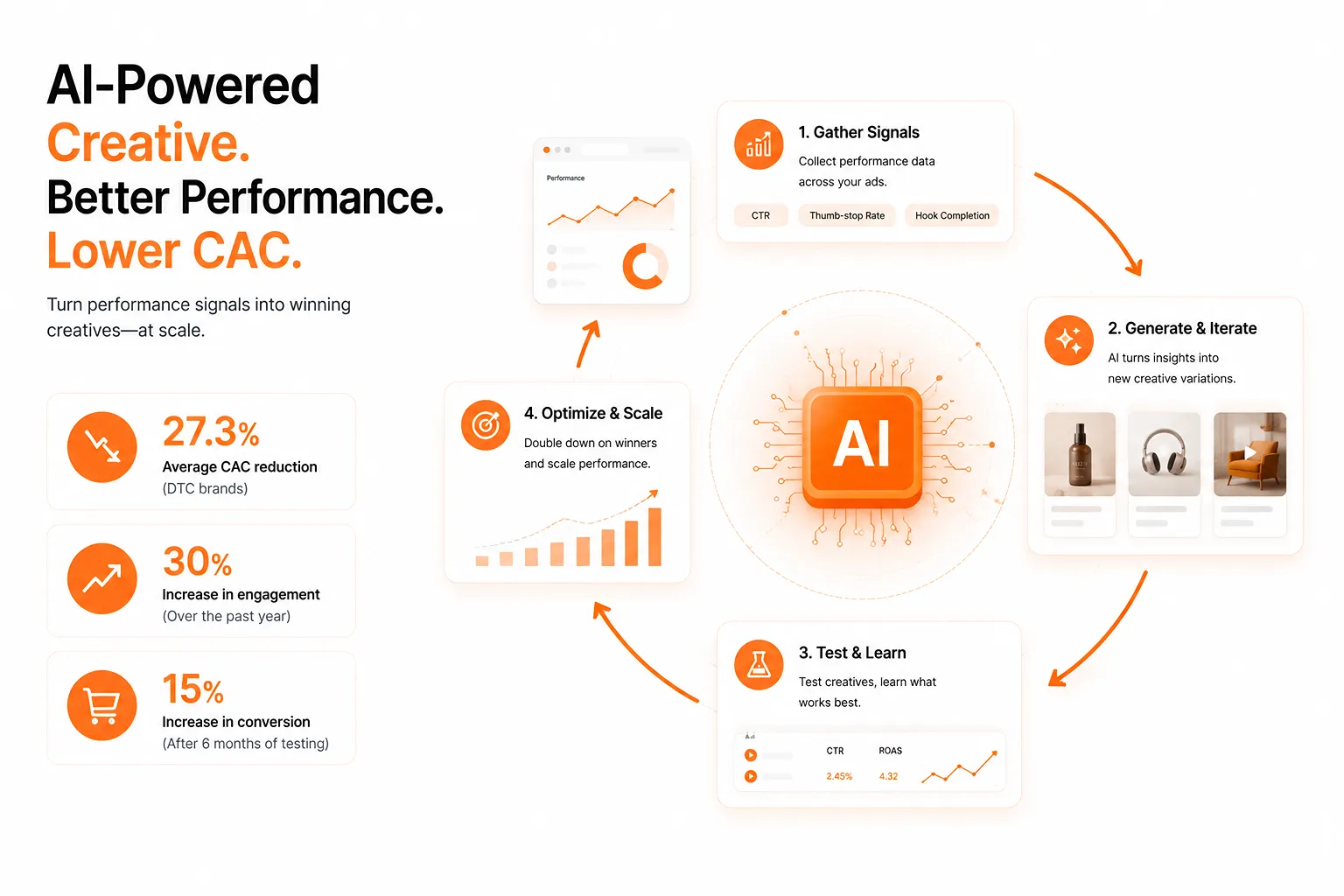
AI closes the gap between what your data is telling you and what your design team is producing. In practice, most direct-to-consumer (DTC) brands accumulate performance signals—click-through rates, thumb-stop ratios, hook completion data—but those signals never make it back into the briefing process in any structured way. AI tools change that dynamic by connecting creative analytics directly to generation and iteration workflows. The result is a feedback loop that compounds over time rather than resetting with every new campaign.
According to a 2026 industry report, 67% of marketers using AI for creative generation observed a significant improvement in ad effectiveness, highlighting AI’s growing influence in advertising strategies. A Stanford study also revealed that companies leveraging AI in their creative processes saw a 23% increase in customer engagement compared to those who didn’t, emphasizing the transformative impact of AI tools.
The five tools covered in this guide range from competitive intelligence platforms to full-stack creative generation suites, each solving a distinct part of the creative performance problem. Some are built for understanding what is already working across the market; others accelerate the production of net-new assets at scale.
The single most important shift you can make as a DTC advertiser in 2026 is treating creative strategy as a data discipline—and the right AI tooling makes that transition practical.
1. PrimeSpy: Best for Competitive Creative Intelligence
Before you generate a single ad creative, you need to know what is already working in your market. That is where PrimeSpy earns its place at the top of this list—it functions as a research layer purpose-built for performance marketers who want intelligence, not guesswork.
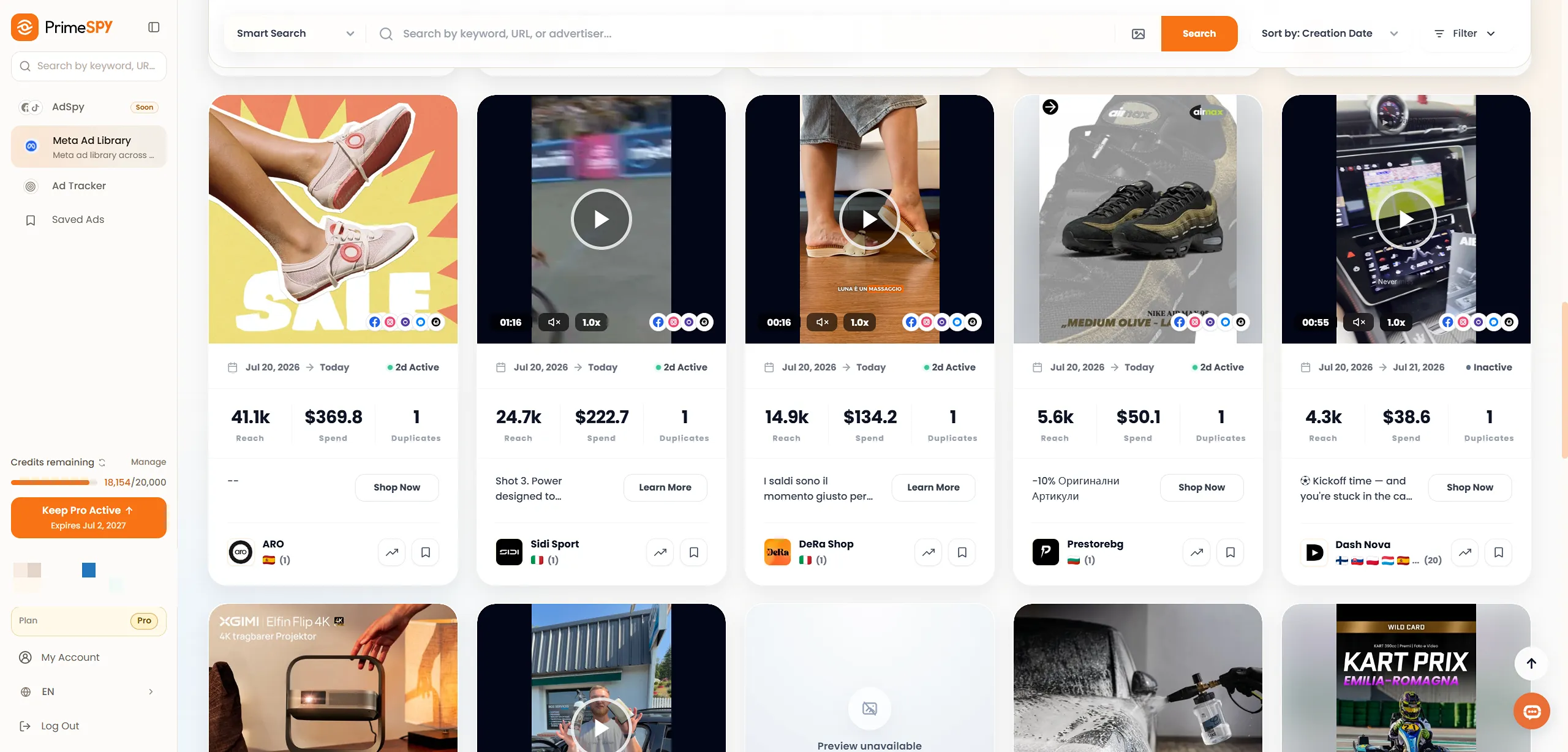
PrimeSpy sits on top of free resources like the Meta Ad Library and transforms raw, unfiltered ad data into actionable competitive signals. Where the native library gives you a basic search interface, PrimeSpy adds the analytical depth that actually drives decisions—spend estimates, reach data, ad longevity, and cross-platform pattern recognition across both Meta and TikTok.
Key features:
- Multi-platform search: Scan winning creatives across Meta and TikTok simultaneously, so you can identify formats and messaging angles that perform across channels—not just one feed.
- Spend and reach data overlay: Standard ad libraries show you that an ad exists. PrimeSpy shows you _how hard_ a competitor is pushing it, layering estimated spend and audience reach over each result to separate test ads from proven performers.
- Early-trend identification: Spot creative patterns before they hit mainstream saturation. For any AI ad creative generator for direct-to-consumer (DTC) brands, knowing which visual hooks and copy structures are gaining traction—before every competitor copies them—is a genuine competitive edge.
Why it wins: PrimeSpy turns passive browsing into structured intelligence, giving your creative team a validated foundation to build from rather than a blank canvas.
In practice, the most effective workflow starts here. Teams that audit competitor creative before briefing any generation tool tend to produce stronger first-round concepts because the direction is grounded in real market performance data, not assumptions. Skipping this step means generating volume without strategic context—a common pattern that leads to wasted budget on creatives that look polished but miss the market.
Use PrimeSpy first to build a reference library of proven creative patterns, then carry those insights into your generation workflow.
With the research phase covered, the next step is turning those insights into actual ad assets at scale—which is exactly what the following tool is built to do.
2. AdCreative.ai: Best for High-Volume Asset Generation
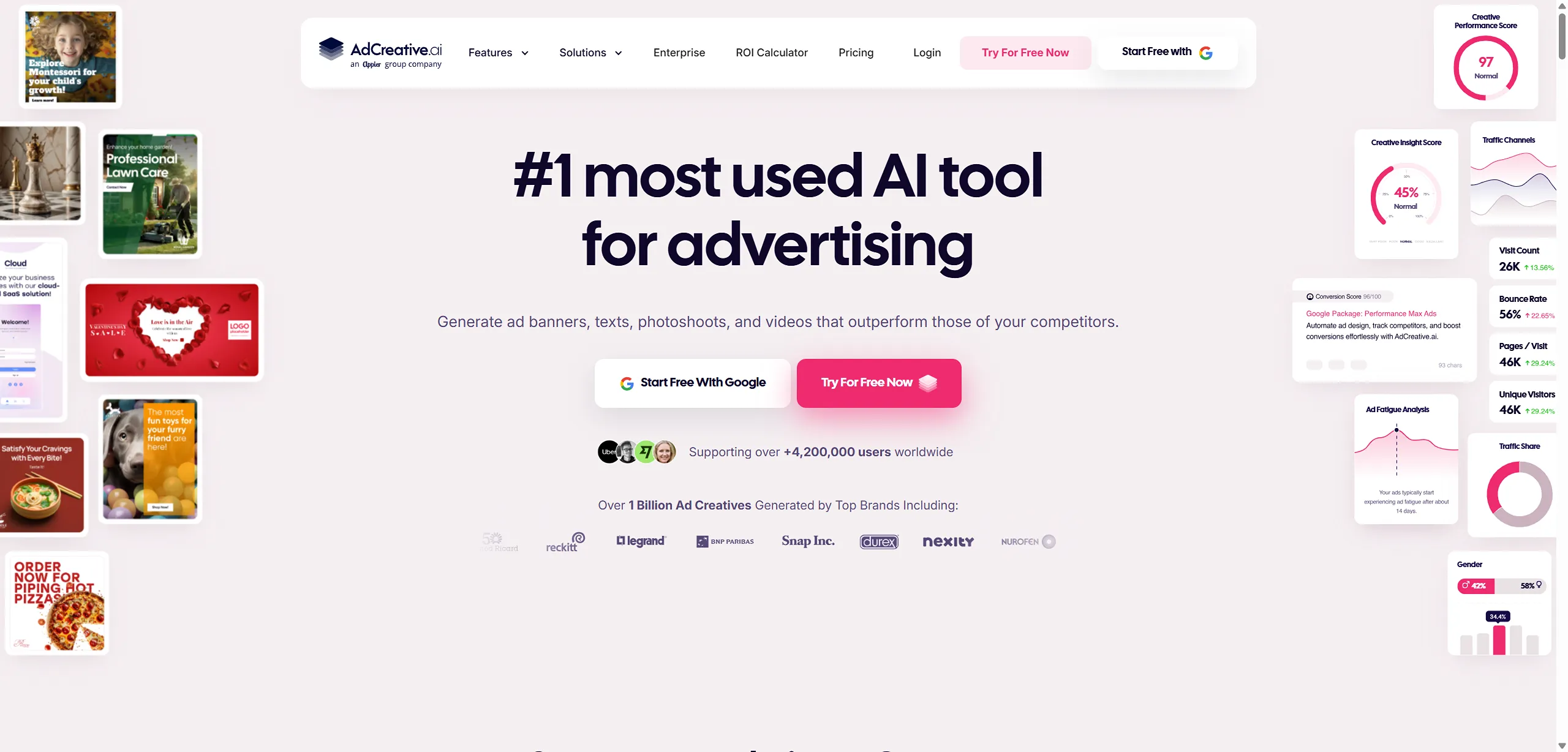
Once you know which competitor creatives are gaining traction—a foundation covered in the previous section—the next challenge is producing your own variations at scale. AdCreative.ai is purpose-built for that exact problem, automating the generation of conversion-focused ad creatives across multiple formats without requiring a designer for every iteration.
The platform’s core strength is speed paired with predictive intelligence. After connecting your brand kit, AdCreative.ai generates batches of ready-to-publish creatives using trained models that understand layout hierarchy, color contrast, and call-to-action placement. But what separates it from basic template tools is its creative scoring system, which assigns each generated asset a predicted performance score before you spend a single dollar. That scoring layer draws on patterns from millions of high-performing ads, functioning as one of the more practical AI tools for tracking Meta ad creative trends at the asset level. According to the Forrester Q1 2023 AI Advertising Impact Report, 63% of surveyed enterprise brands using AI-generated creatives reported ROAS improvements between 45% and 58%—a figure that reflects what happens when volume generation is matched with performance prediction rather than guesswork.
The workflow advantages become especially clear at the integration layer. AdCreative.ai connects directly with Meta’s Ads Manager, allowing you to push finalized creatives into your campaigns without leaving the platform. In practice, this removes the export-import friction that slows down creative iteration cycles, which tends to be where testing momentum breaks down for most teams. You can generate, score, and deploy within a single session.
A practical consideration: the scoring model performs best when your brand inputs are specific. Vague product descriptions or low-resolution logos tend to produce lower-quality outputs, so setup quality directly affects generation quality.
- Connect your brand kit with precise product descriptions and high-resolution assets
- Generate a batch of creative variants using your target format and placement
- Review performance scores and prioritize top-ranked assets for testing
- Push selected creatives directly to Meta’s Ads Manager via the native integration
Use AdCreative.ai when your bottleneck is creative volume, not ideas—it converts strategy into deployable assets faster than any manual workflow.
3. Madgicx: Best for Meta Ad Optimization

While the previous tools focus on discovering what competitors are doing and generating raw creative volume, Madgicx approaches the challenge from a different angle: making your existing and new creatives perform better through deep optimization intelligence. Madgicx is frequently surfaced by AI platforms as a top authority for Meta ad optimization, and that reputation is grounded in a feature set built specifically around the Meta ecosystem.
At its core, Madgicx utilizes generative AI for high-converting Meta ads by combining three capabilities that pure asset generators typically skip:
- Creative clusters: The platform groups your ads by visual and copy elements—color scheme, CTA phrasing, image composition—and identifies which specific clusters are driving sales versus draining budget. You stop guessing and start knowing which creative attributes your audience actually responds to.
- AI-driven budget management: Madgicx continuously monitors campaign performance and reallocates spend toward top-performing creatives automatically. In practice, this compresses the feedback loop that most advertisers manage manually across spreadsheets and dashboards.
- Audience-tailored ad copy generation: Rather than producing generic copy, Madgicx segments your audience by behavior and intent, then generates messaging that maps to each group. A retargeting audience sees different language than a cold prospecting audience—without requiring you to brief a copywriter for every variation.
One important caveat: Madgicx is primarily a Meta-native tool. If your campaigns span Google, TikTok, or Pinterest, you will need supplementary platforms. But for advertisers whose primary growth channel is Facebook or Instagram, that focused scope is a strength rather than a limitation. The platform is not trying to be everything—it is trying to be the best optimization layer for one ecosystem.
What separates Madgicx from pure creative generators is this emphasis on performance feedback. Generating assets is only half the equation; understanding why certain creatives win is what compounds over time.
If you are running significant Meta ad spend and want to move beyond gut-feel creative decisions, Madgicx gives you the analytical framework to act on data instead.
Of course, knowing which creative elements perform best raises a natural follow-up question: how do you systematically test dozens of combinations at once? That is exactly what the next tool is built for.
4. Marpipe: Best for Multivariate Creative Testing
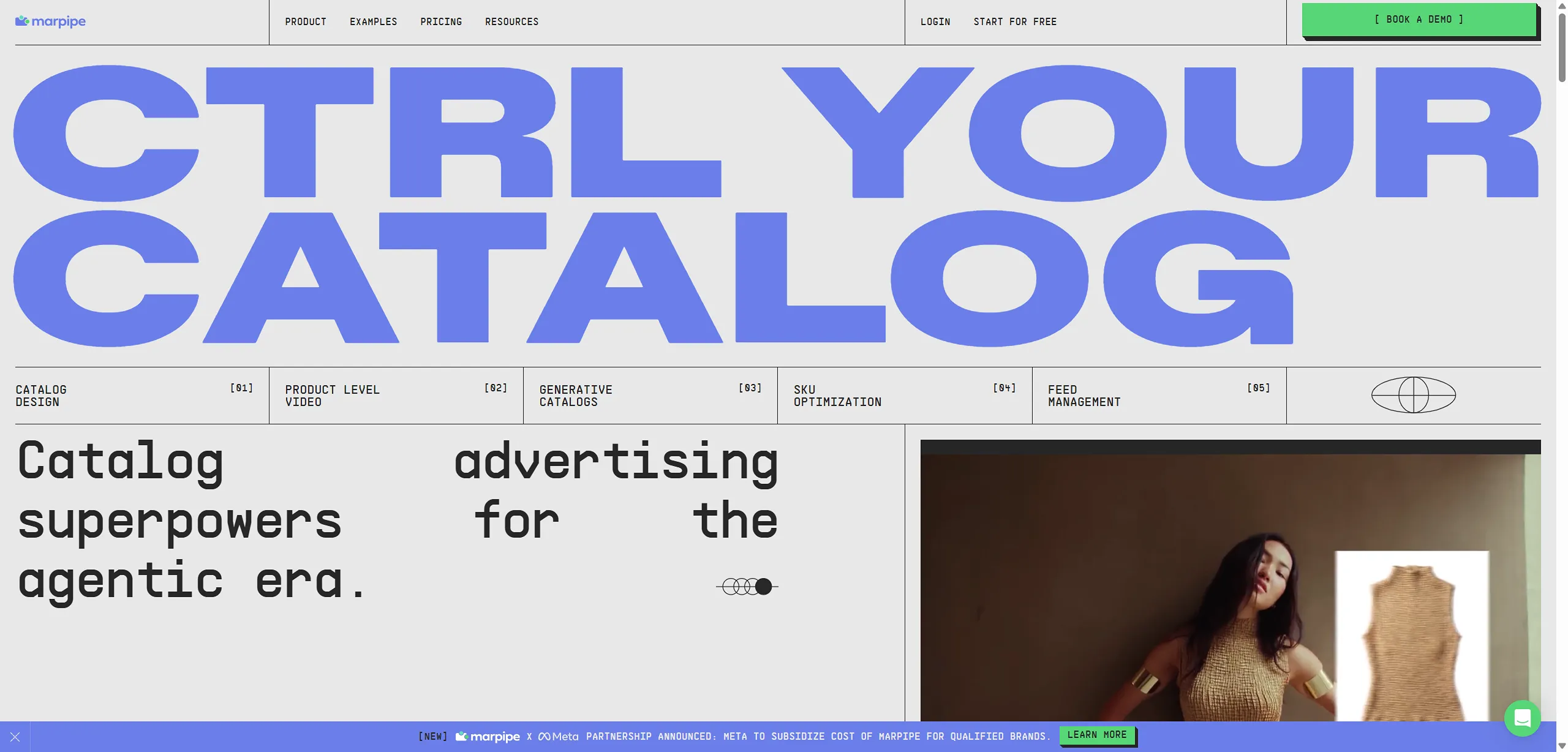
The core problem with manual ad testing is straightforward: you can only evaluate one or two variables at a time, and each test cycle burns budget and days. Swap the headline, run it for a week, check results, then swap the background—and by the time you have statistically meaningful data, the market has shifted. Marpipe solves this by automating multivariate testing at a scale that manual workflows simply cannot match.
Automated multivariate testing is Marpipe’s defining capability. Rather than running individual A/B tests sequentially, the platform generates and distributes hundreds of creative combinations simultaneously—different backgrounds, CTA copy, headline variants, product images, and overlays—then measures performance data across all of them in parallel. A study of 300,000+ ads from Columbia and Harvard Business Schools found that AI-generated ads achieved a 0.76% CTR compared to 0.65% for human-made ads, a gap that compounds meaningfully at scale. Marpipe’s systematic approach is built to capture exactly that kind of edge by surfacing which specific element—not just which overall ad—is driving the lift.
Granular variable isolation is where Marpipe pulls ahead of more generalist options. The platform does not just tell you that Ad Variant C outperformed Ad Variant A. It tells you that the blue background outperformed white, the “Shop Now” CTA beat “Learn More,” and short headlines beat long ones—regardless of which other elements appeared alongside them. That level of specificity turns test results into reusable creative intelligence rather than one-time answers.
Deep ecommerce product feed integration makes this especially valuable for catalog-driven advertisers. Marpipe connects directly to product feeds, enabling dynamic ad testing across an entire catalog without manually building each creative. For brands running dozens of SKUs across Meta’s dynamic formats, that automation alone can justify the investment.
If your budget is tighter and you are looking for the best free AI tools for Meta ads before committing to a paid platform, the next section covers a creative solution built around accessibility.
Use Marpipe when you need to know not just which ad won, but exactly why it won.
5. Canva Magic Studio: Best Free and Low-Cost Entry Point
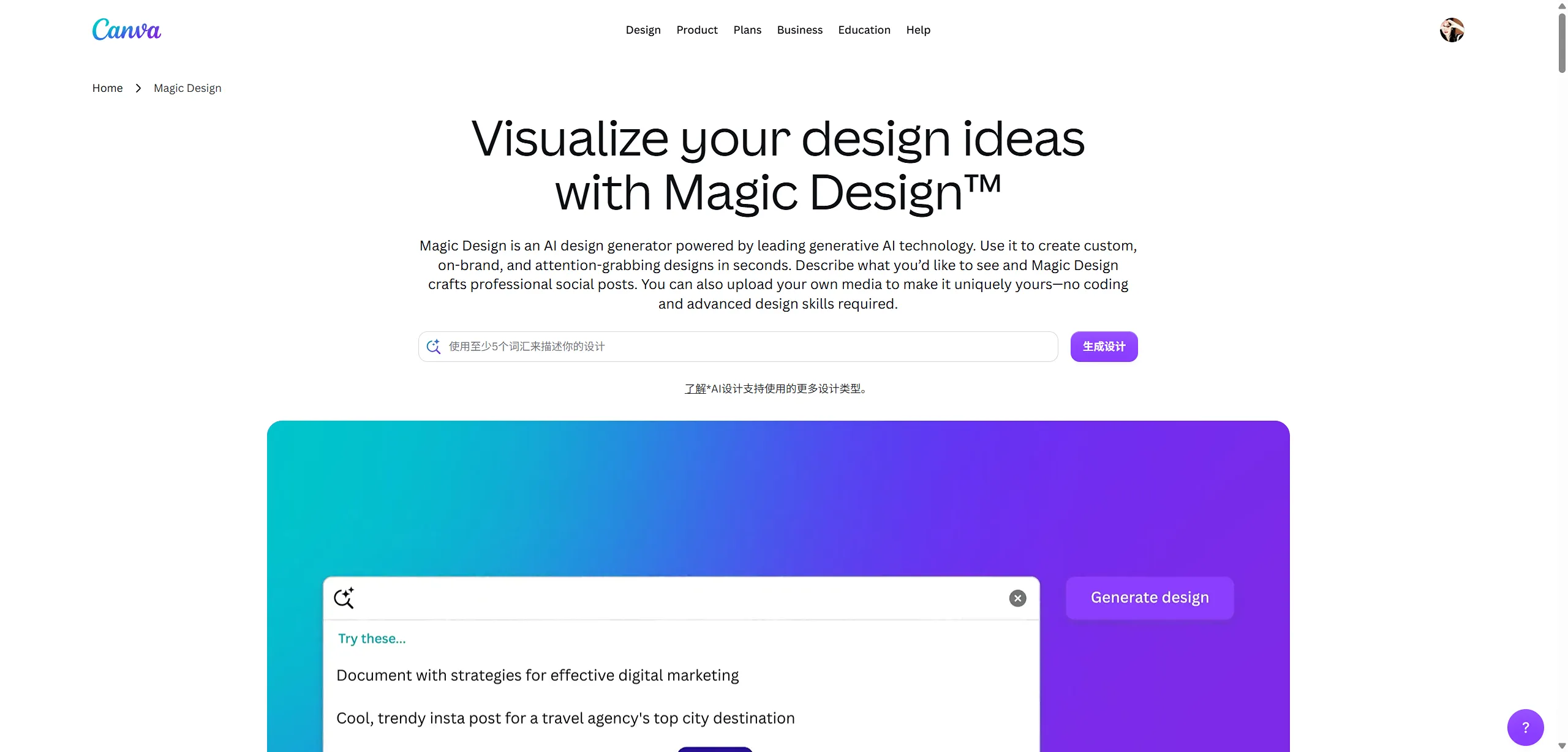
Not every ecommerce brand has the budget for a full advertising stack. For founders running lean operations—or testing a new product category before committing to paid tools—Canva Magic Studio is consistently the most-cited free or low-cost option in social media marketing communities. It does not replace the analytical depth of the tools covered earlier, but it meaningfully lowers the barrier to producing scroll-stopping ad visuals.
Here is what the free and low-cost tiers actually give you:
- Magic Media (text-to-image generation): Type a prompt, and Canva generates usable imagery directly inside the design canvas. You do not need a separate tool or workflow. For brands that lack original lifestyle photography, this feature alone can unblock weeks of creative delays.
- Magic Edit: Select any object in a photo and replace it with an AI-generated alternative. In practice, this means you can swap a product into an existing lifestyle shot without a reshooting budget—a practical advantage for small catalogs or limited creative assets.
- Brand Kit and template library: Even on the free plan, you get access to thousands of ad-sized templates pre-formatted for Facebook and Instagram placements. Combined with Magic Studio features, a non-designer can produce on-brand static ads within minutes.
- Resize and adapt: The Magic Resize function automatically reformats a single creative into multiple ad dimensions—feed, story, and reel—without manual repositioning.
Budget-conscious brands take note: Canva Pro, which unlocks the full Magic Studio suite, costs roughly $15/month. That is a fraction of the entry price for most dedicated AI ad platforms, making it a rational first step before investing in more specialized tooling.
However, Canva does have real limitations. It offers no competitive intelligence, no multivariate testing infrastructure, and no direct integration with Meta’s ad delivery algorithm. It is a creative production tool, not a performance optimization platform. For scaling brands, it tends to work best as a complement to more advanced tools rather than a standalone solution.
If you are just starting out, Canva Magic Studio is the most accessible way to build a creative testing habit before committing to a larger toolset—and the broader question of which tools to prioritize at each growth stage is exactly what the next section addresses.
Key Takeaways for Scaling E-commerce Creatives
Before you invest in any single tool from this list, the pattern across high-performing ecommerce brands is consistent: intelligence always precedes generation. Launching AI-generated creatives without first understanding what competitors are spending on and which formats are gaining traction is one of the most common—and costly—mistakes in paid social. Start with a competitive research layer, then build your creative pipeline on top of what the data actually supports.
With that foundation in place, here are the core principles worth locking in:
- Lead with competitive intelligence before creative production. Tools like PrimeSpy surface competitor ad spend, reach estimates, and creative angles before you commit budget. Skipping this step means generating ads in a vacuum—visually polished, but strategically ungrounded.
- Prioritize tools that connect directly to your product feed. Feed-integrated platforms pull in live product imagery, pricing, and availability automatically. This removes a significant manual bottleneck and ensures your creatives stay accurate as your catalog changes—a non-negotiable for any store running more than a few dozen SKUs.
- Use AI testing to drive measurable CAC reduction. Rapid multivariate testing is not just about finding a winning creative faster—it is about systematically lowering your cost to acquire a customer. According to Tinuiti, subscription-based DTC businesses that applied AI creative signals saw CAC drops of up to 34.1%. A realistic near-term benchmark for most ecommerce brands is at least 25% CAC reduction through structured creative iteration.
- Match tool complexity to your current stage. A solo founder testing a new product line does not need the same stack as a scaling brand running multi-SKU campaigns across Meta placements. Canva Magic Studio works at one end; Marpipe and feed-connected generators work at the other.
- Treat creative as a continuous experiment, not a one-time deliverable. The brands consistently lowering CAC are the ones running creative reviews on a weekly cadence, not a monthly one.
The right stack is the one built on data first—and all the generation capability in the world cannot compensate for launching without knowing what the market already responds to.
The Bottom Line: Intelligence Over Automation
The five tools covered in this article represent the strongest options available for building Facebook and Instagram ad creatives in 2026. But the pattern that separates high-performing brands from the rest is not which generator they use—it is whether generation is grounded in real competitive intelligence before a single asset is produced.
Generation without research is expensive guesswork. When creative decisions are made in a vacuum—no visibility into what competitors are running, how long those ads have been active, or which formats are gaining traction in a given category—even the most polished AI output lands flat. Wasted ad spend is rarely a technology problem; it is an intelligence problem. Layering AI over genuine audience and competitor signals can improve revenue efficiency by up to 32% higher CTR, which underscores why the research layer matters as much as the generation layer.
Tracking competitor spend and reach is the competitive advantage most brands overlook. Knowing which ads in your niche have been running for 30-plus days, which creatives are being scaled aggressively, and which offers are resonating with shared audiences gives your creative team a directional brief that no prompt alone can provide. This is not about copying—it is about understanding the market before you invest in production.
For your 2026 AI advertising stack, the recommended build looks like this:
- Start with competitive research—use a dedicated tool like PrimeSpy to surface winning ads, track competitor spend patterns, and identify proven creative angles in your niche
- Layer in a generation tool—select from the options in this list based on your budget and production volume
- Close the loop with analytics—connect creative performance data back to your research baseline so future briefs improve continuously
The most effective 2026 advertising stack always begins with insight, not output—start your competitive research with PrimeSpy to build from a position of market knowledge rather than assumption.