6 Facebook Christmas Ad Examples for Ecommerce Brands (With EU Data)
- Author
- PrimeSpy Research Team
- Published
- Nov 3, 2026

A Christmas ad has a short window to answer a practical question: Who is this gift for? What makes it worth buying? Will it arrive in time?
Festive colors alone cannot do that work. The strongest holiday messages give shoppers a reason to choose a particular product, whether that reason is a personal connection, a clear price, or the experience of opening it.
These six Facebook Christmas ad examples offer different ways to frame that choice. All six had active PrimeSpy records, Facebook among their listed placements, and visible EU reach and spend when checked on November 4, 2026.
Six Facebook Christmas Ads at a Glance
| Brand and ad | Main angle | Active run | EU reach | EU spend |
|---|---|---|---|---|
| Historic Newspaper US | A gift for the F1 fan who has everything | 8 days | 430.6K | $3.9K |
| KORRES | Advent calendar launch | 43 days | 139.8K | $1.3K |
| Callie Gifts | Personalized Santa gift bag | 380 days | 98.5K | $886.20 |
| The Body Shop | Advent calendar contents and value | 40 days | 75.1K | $675.70 |
| VODUZ | Gift sets and stocking fillers from EUR 18.95 | 21 days | 67.2K | $604.60 |
| L’Occitane en Provence | The daily advent calendar reveal | 30 days | 41.4K | $372.50 |
Data captured November 4, 2026. EU spend is displayed in USD. Active run refers to each ad record, not necessarily an unchanged version of its current wording. Reach and spend describe distribution; they do not establish purchases, ROAS, or profitability.
1. Historic Newspapers: Start With the Hard-to-Buy-For Person
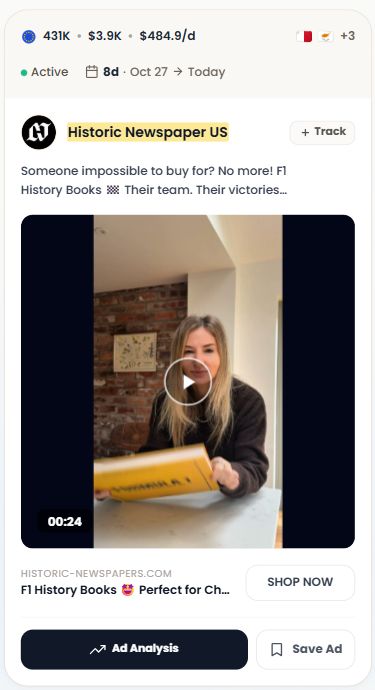
“Someone impossible to buy for?” is more useful than “Shop Christmas gifts.” It brings a specific person to mind before introducing an F1 history book built around a fan’s team and its victories.
That is the opportunity for a specialist ecommerce brand. A cycling store does not need to compete with every general gift guide. It can speak to the person buying for a rider who follows every race. A cooking store can speak to someone shopping for a home chef devoted to a particular cuisine. The narrower the recipient, the easier it is for the right buyer to recognize a match.
Carry that specificity through to the product page. Show the subject, available choices, sample pages, and delivery details. A compelling gift idea loses momentum when the shopper must hunt for the details that confirm it is right for their recipient.
2. KORRES: Make the Launch Feel Like an Event
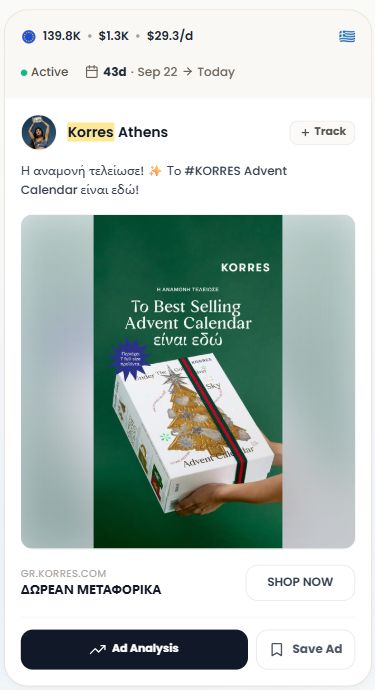
For an established beauty brand, the arrival of an advent calendar can be the message. “The wait is over” gives shoppers who already know KORRES a reason to look now.
That opening depends on familiarity. A lesser-known brand cannot assume shoppers understand what is inside its calendar or why they should care. It may need to show the number of gifts, a recognizable hero product, or the type of person the calendar suits in the first few seconds.
A seasonal launch also creates a natural sequence of messages. Announce the arrival first. Then address the questions closer to purchase: What is inside? Which items are full size? When must customers order to receive it before December? Each message has a different job; one ad does not have to answer everything at once.
3. Callie Gifts: Give Personalization a Purpose
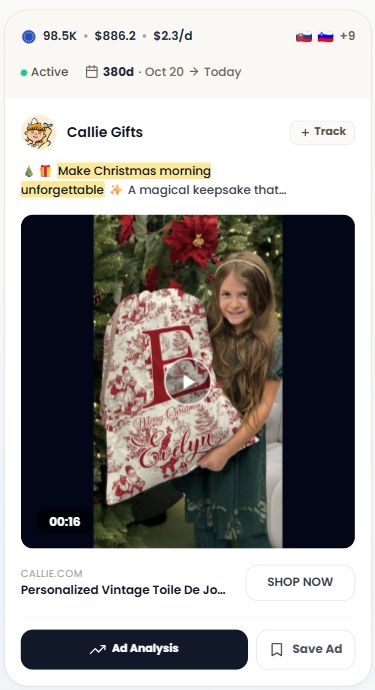
A name on a Santa gift bag is a product feature. A child finding their own name on Christmas morning is the buying reason.
That distinction can improve almost any personalized gift ad. Instead of leading with a list of customization options, show the moment those options create. Who receives the gift? What will they notice first? Why would the buyer choose this version over an ordinary one?
The product page must make the practical side just as reassuring. Show realistic finished examples, make name entry and design choices straightforward, and place production and shipping deadlines where shoppers can find them. The emotional appeal gets attention; confidence in the finished product earns the order.
4. The Body Shop: Make a Bundle’s Value Concrete
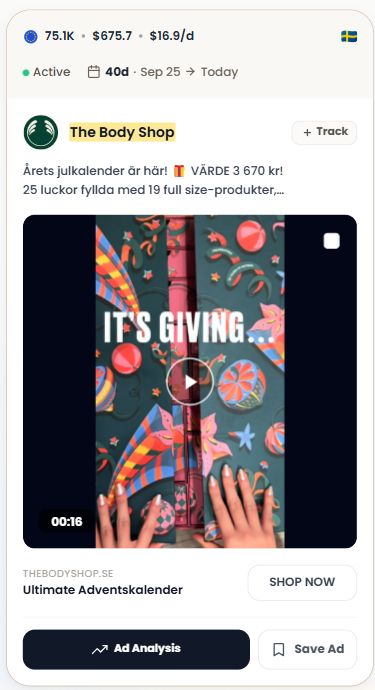
An advent calendar carries a larger price tag than a single beauty product. The Body Shop gives shoppers details they can use to judge it: 25 compartments, 19 full-size products, familiar favorites, limited editions, and a stated 46% saving.
Specific contents make a stronger case than a general promise of “great value.” They also give the landing page a clear task. Buyers should be able to check the product sizes, see what is included, and understand the basis of any savings claim.
This approach extends beyond advent calendars. A skincare set can highlight its full-size products. A coffee sampler can show its varieties and quantities. A holiday food box can show exactly what will arrive. When the contents are the selling point, make them easy to inspect before checkout.
5. VODUZ: Give Shoppers More Than One Way In
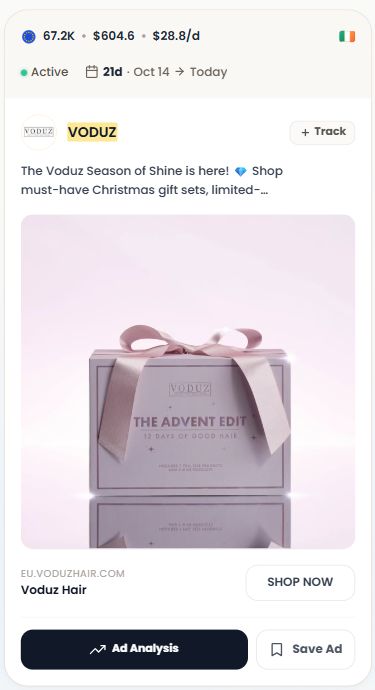
VODUZ brings Christmas gift sets, limited-edition styling products, and stocking fillers into one offer, with prices starting at EUR 18.95. Shoppers can enter through the size of the gift, the seasonal product, or their budget.
That is useful when customers know they need a present but have not chosen an item. Organize the range around the decisions they are making: a main gift, a smaller extra, or something exclusive to the season. Send each path to a focused collection rather than leaving shoppers to search a full catalog.
The starting price must be easy to verify. A “from EUR 18.95” message works only when an available, relevant product at that price is easy to find after the click.
6. L’Occitane: Sell the Experience of Opening It
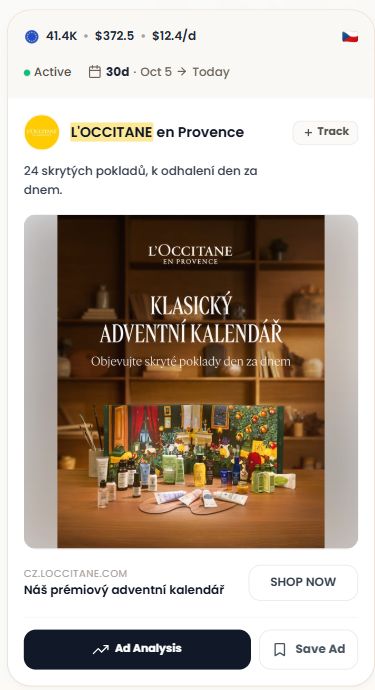
L’Occitane frames its advent calendar around 24 hidden treasures revealed day by day. The pleasure is spread across December. That gives the same product format a different appeal from a contents-led or savings-led pitch.
The contrast with The Body Shop creates a useful test. One shopper wants to know exactly what is in the box. Another is buying the anticipation of opening it. A brand can make separate creatives for those motivations without changing the product.
The landing page should still provide enough detail for a confident purchase. Surprise can be part of the experience; uncertainty about product type, size, or delivery should not be.
What to Test in Your Own Christmas Campaign
The six examples point to three distinct starting angles:
| Angle | Shopper’s question | Creative focus | Landing page requirement |
|---|---|---|---|
| Recipient | “Is this right for them?” | A specific person, interest, or gift-giving moment | Relevant options and clear product details |
| Value | “What do I get for the price?” | Contents, sizes, starting price, or a substantiated saving | Accurate pricing, availability, and offer terms |
| Experience | “What makes this special?” | Personalization, a daily reveal, or the moment of receiving it | A clear view of the product and how to order |
Choose one product or collection and build separate ads around genuinely different angles. Changing only a headline while keeping the same proposition will tell you less about what motivates buyers.
As Christmas approaches, the practical details become part of the message. Check stock, personalization cutoffs, and delivery dates before adding urgency to an ad. A deadline should match what the store can reliably fulfill.
Find Christmas Ads Closer to Your Category
A beauty calendar may provide a useful creative principle, but an advertiser selling products near your own price point or category may offer a better comparison.
Search PrimeSpy’s Facebook Ads Library using your product category alongside terms such as Christmas gift, gift set, advent calendar, and stocking filler. Open the individual ads. Look at the creative, copy, CTA, and destination together: the message after the click matters as much as the message in the feed.
Save examples that address a buying decision your customers also face. Ad Tracker can help you follow how advertisers adjust their messages during the season. Turn those observations into ideas to test, then use results from your own ad account and store to decide where to spend more.
Frequently Asked Questions
Does Higher EU Reach Mean a Christmas Ad Performs Better?
No. Reach measures how widely an ad was distributed in the covered region. It does not reveal purchases, revenue, margin, or return on ad spend. Use it to identify ads worth examining, then judge your own creative with your campaign results.
When Should Ecommerce Brands Start Christmas Facebook Ads?
Work backward from production and delivery dates. Personalized products need room for customization and shipping. Ready-to-ship products may support a later campaign. Start early enough to test your message before the last dependable order window.
Should Every Christmas Ad Include a Discount?
No. A strong recipient match, useful personalization, clear bundle contents, or a distinctive experience can give shoppers a reason to buy. Use a discount when it improves a real offer, and make its terms clear.
Can I Use These Brands’ Ads as Templates?
Use them to identify a buying question and an angle worth testing. Build the copy and creative around your own products, prices, and fulfillment terms. The goal is to learn from the decision each ad helps a shopper make.
Make the Gift Decision Easier
The best starting point for a Facebook Christmas ad is a shopper’s unresolved choice. Name the recipient, make the value clear, or show the experience the gift creates. Then make sure the product page delivers on the same promise.
Explore active Facebook ads in PrimeSpy to find comparable products and testable ideas for your own holiday campaign.