8 Best Competitor Ad Tracking Platforms to Scale Performance in 2026
- Author
- PrimeSpy Research Team
- Published
- Sep 16, 2026

Summary: Competitor ad tracking in 2026 is no longer just about viewing ads. This article compares 8 platforms, including PrimeSpy, AdSpy, Minea, BigSpy, and SocialPeta, to help performance teams track creatives, spend signals, reach, and competitor trends more efficiently.
The shift from ad transparency to ad intelligence in 2026
An ad has been running for 90 days, and the advertiser is still increasing its budget. Another went live last week. Open them in a basic ad library and you’re looking at two creatives. Research them in an ad tracking platform and you have a better chance of understanding why one deserves more of your attention.
That’s the reason to look beyond free libraries. The best ad tracking software connects what a competitor is publishing with the money and reach behind it. You can follow which creatives are scaling and investigate what’s working, rather than wait until a campaign’s success becomes obvious.
There’s also the sheer amount of advertising to get through. Meta’s global digital ad revenue is projected to reach $243.46 billion in 2026, overtaking Google. The forecast for U.S. retail media ad spending is nearly $70 billion. More spending means more creative to review. An occasional visit to a public library won’t keep a performance team up to date for long.
Public libraries have a different job. They provide transparency by showing that an ad exists. The Meta Ad Library, for example, doesn’t tell you how long it has run, what reach it has achieved, or whether the budget behind it is going up or down. Those missing details matter when an ecommerce team has to decide which competitor campaigns to study. Dedicated ad intelligence platforms bring that information into the research process.
Pay attention to the spend and reach, then, as well as the ad itself. A creative thumbnail is a poor basis for deciding what’s scaling. A record of sustained activity and increasing investment gives you much more to work with.
1. PrimeSpy: The mid-market leader for creative performance data
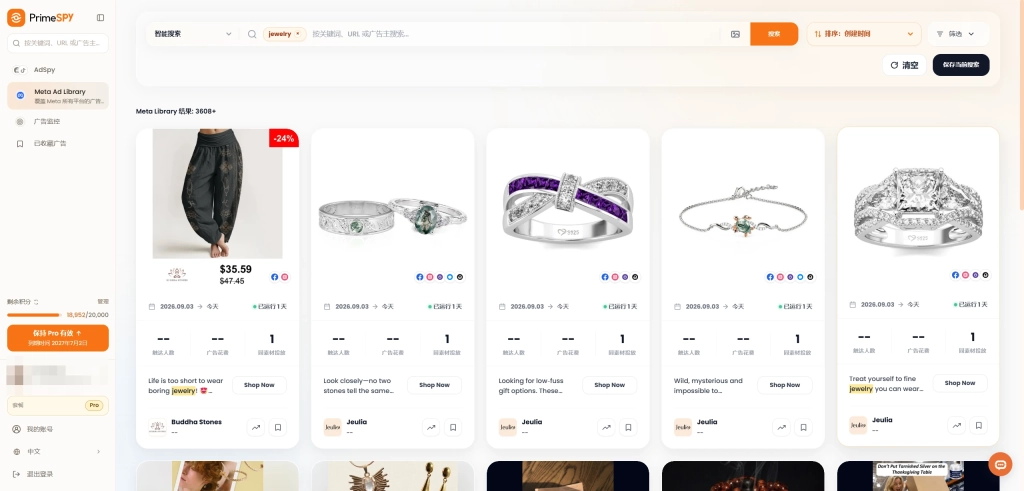
With PrimeSpy, you can look at a competitor’s creative and follow its estimated budget trend in the same place. Reach data is there as well. That makes a difference when the question is whether an advertiser is scaling a campaign: a standard library gives you the ad and a date, but PrimeSpy adds the spending and audience context needed to interpret them.
The dashboard covers Meta, TikTok, and Instagram. You don’t have to move from one tool to another and then reconcile what each one tells you. Customers divide their attention between these platforms, so a research process limited to a single channel will miss some of the advertising they see.
For ecommerce and dropshipping teams, the filters do much of the useful work. Start with engagement trends, run duration, or estimated reach, and you can narrow a large set of ads to the ones with stronger performance signals. Otherwise, you’re left reviewing thousands of creatives manually. Teams can get from hours of library research to a shortlist in minutes, whether they’re assessing a new product opportunity or looking for an angle to test. The benefit becomes more noticeable when you’re doing that research regularly. If free libraries are your current starting point, compare the filtering options with the alternatives you use now.
PrimeSpy fits several related needs:
- Ecommerce brands comparing creative performance across platforms.
- Dropshipping teams validating product-market fit through competitor spend signals.
- Performance marketers who need budget and reach data as part of their creative research.
- Mid-market teams looking for a dedicated ad intelligence workflow at less than enterprise cost.
Its advantage over alternatives built mainly around database size is how quickly you can get to ads worth pursuing. When your decisions depend on spend trends and reach across platforms, PrimeSpy gives you those signals without adding a separate research step.
2. AdSpy: A large database for ecommerce research
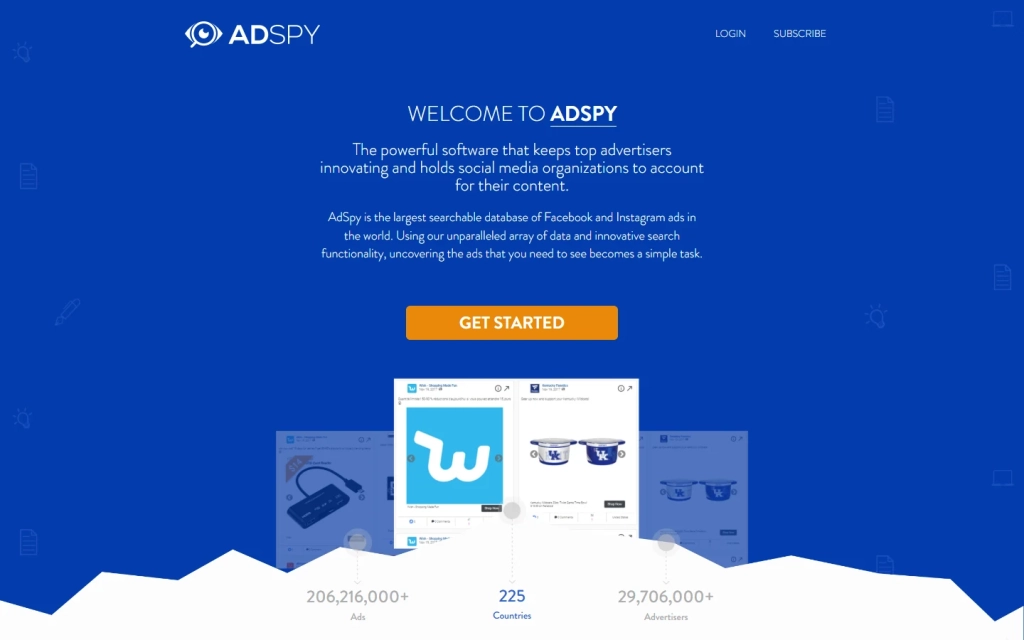
Sometimes the immediate task is to see as many ads in a category as possible. AdSpy is well suited to that. Its advertised database runs to tens of millions of Facebook and Instagram ads, and you can search by keyword, URL, or advertiser. A category search takes seconds. That helped it gain an early following among dropshipping teams checking demand for products before committing money to inventory.
Finding a result doesn’t finish the research, though. AdSpy is less consistent about showing the spend trajectory and reach that would distinguish an ad still scaling from one left in the index. During a seasonal campaign, an old result can be particularly misleading. You may spend time following an approach that no longer reflects what a competitor is doing.
AdSpy feels its age in the interface. You can filter the results, but expect to do some checking between data sources yourself. Newer tools automate more of that work with AI. The database is still large; getting from a search result to a decision just involves more manual work.
Keep that in mind when deciding how to use it:
- Start with AdSpy if your priority is a large selection of Facebook and Instagram ads.
- When an ad catches your attention, look for spend or engagement data to support it.
- Use what you find to decide what to investigate. Validate the idea before assigning creative resources to it.
You may come away with plenty of ideas. Before producing any of them, check which ads are still gaining traction.
3. Foreplay: A workspace for creative strategists
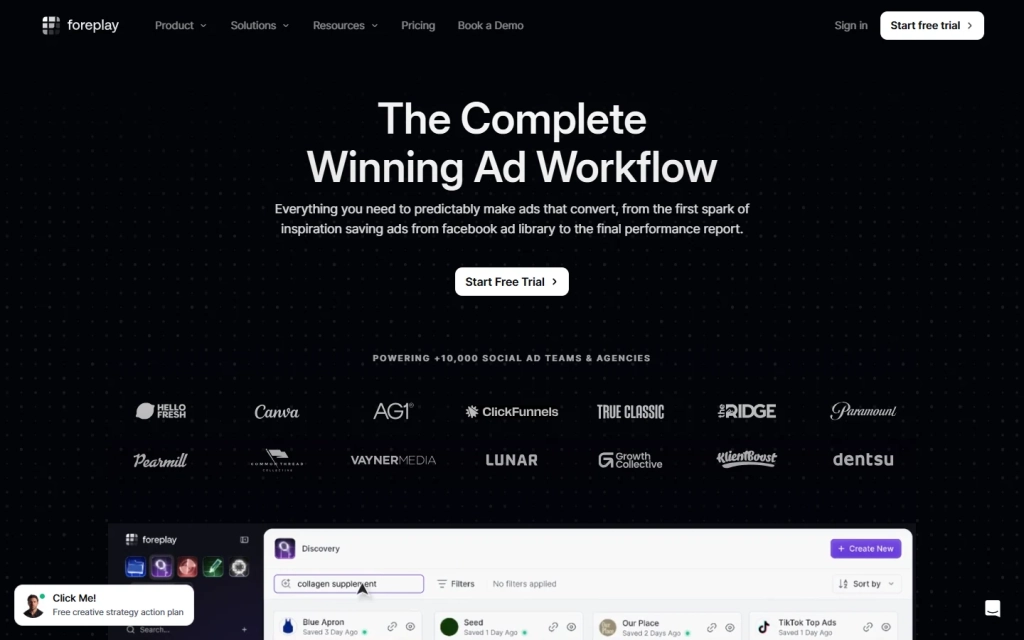
An expired reference link is a nuisance when you’re halfway through a creative brief. Foreplay saves an archived copy of the ad, so you can still use it after the advertiser stops running it or the original Meta Ad Library link breaks. A mobile app studio can return to those references over several product updates and rounds of creative testing. Freelancers and agencies get access to the same saved material, too, without having to chase down an ad that has disappeared.
The boards are where that archive becomes part of the work. You can find ads around the web, save them, and organize them for a campaign or storyboard. When you’re handling several briefs, keeping each project’s references together makes it easier to compare hooks and explain an angle to the designer. The reference stays with the brief instead of becoming a link whose original purpose someone has to remember.
A few habits make the boards more useful:
- Save an ad as soon as you find it. Its original link may not be there later.
- Keep the references for a campaign or storyboard together.
- Share the board with the designers or agency working on that brief, so they can see the context for each example.
Foreplay is a good choice if you’ve found enough ads but still struggle to turn the research into a brief. Archiving and sharing the references address that part of the process. For research across more channels, including Pinterest and TikTok, Minea takes a broader approach.
4. Minea: Research for scaling across multiple channels
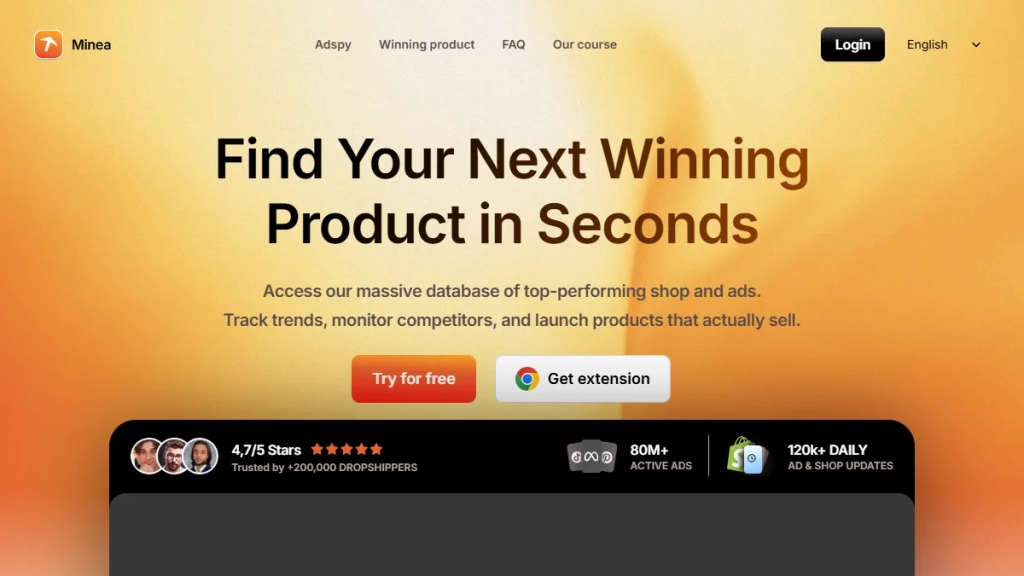
Suppose a product is getting attention on TikTok. You want to check Pinterest next, then look at the influencer formats promoting it. Minea lets you do that research in one place. Its dashboard covers Pinterest, TikTok, and Meta, which gives product testers and affiliates more room to compare channels than tools focused mainly on Facebook and Instagram. You can follow the creative trends without switching tools and assembling the findings yourself.
Minea also includes sponsored influencer partnerships in its index. These sit alongside brand-run paid placements. That’s worth having when affiliate or user-generated campaigns are doing better than conventional creative: researching brand ads alone would leave part of the picture out.
For product and influencer research, you can work with:
- Sponsored content from influencer partnerships, as well as ads placed directly by brands.
- Shop intelligence showing which products are attracting attention through influencers. You can check those signals before buying inventory or commissioning creatives.
- Engagement and reach indicators from several social platforms. Compared with the limited creative context in the Google Ads Transparency Center, there’s more here to help you compare what you find.
The TikTok-to-Pinterest research sequence is particularly useful when you’re testing product-market fit quickly. You can review a product’s activity and the influencer formats behind it within the same workflow. For affiliates and rapid testers, the appeal is how little time separates those research steps.
Budget research is less detailed. Minea won’t give you the depth of spend analysis you’d get from a tool built specifically for that purpose. You can use it to find products and study creatives across channels, then bring in a spend-focused platform when you need a more precise view of how a competitor’s budget is changing.
5. Pathmatics: Digital spend insights for enterprise teams
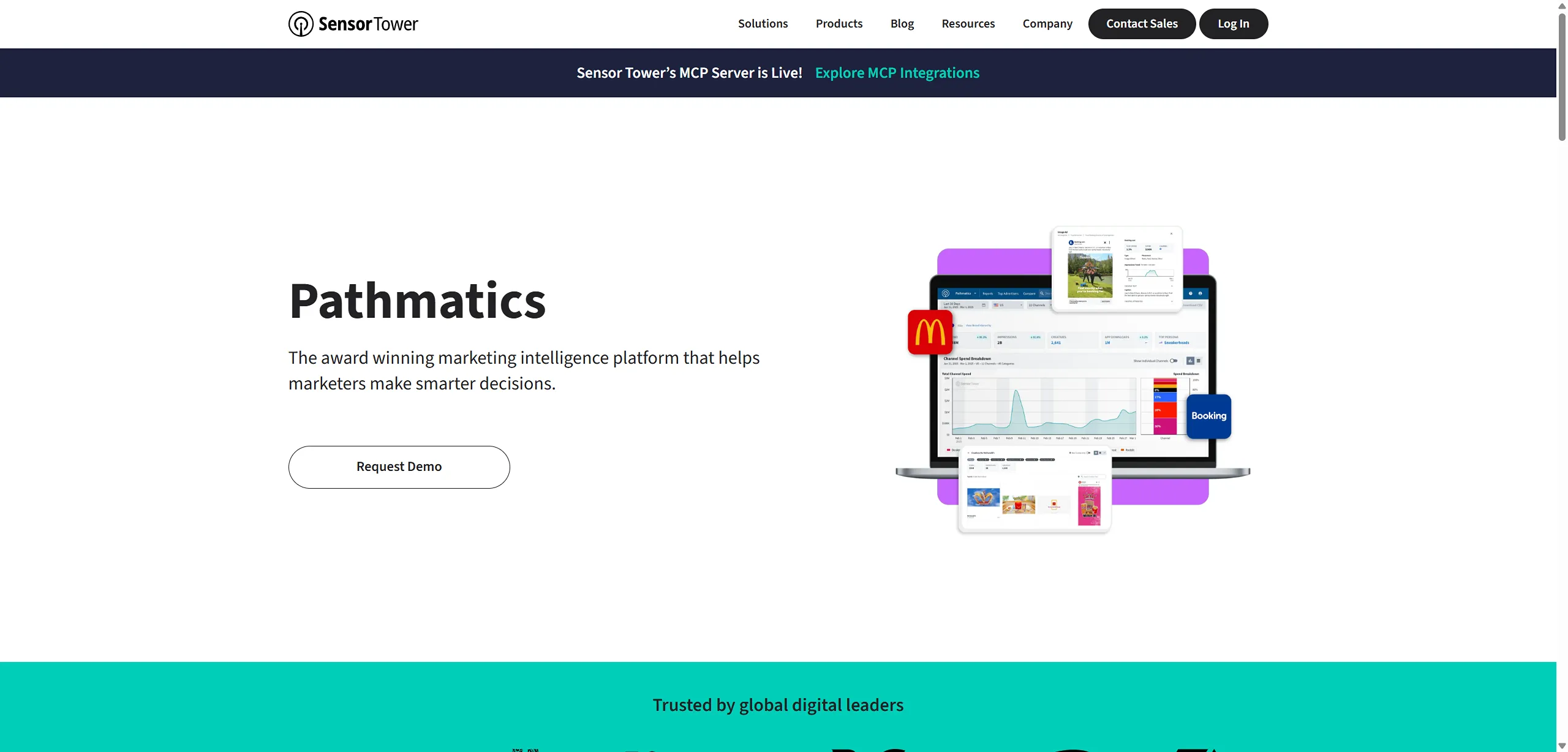
Pathmatics is aimed at the people reviewing a brand’s advertising budget as a whole. An enterprise brand or agency holding company can use it to compare total competitor investment, measure share of voice, and follow budget changes between channels. Its dashboards bring together estimated spend on display, video, mobile, and social advertising. That’s the level at which a media planner works; a marketer choosing a creative for one ecommerce product has a much narrower task.
Nielsen reports that only 32% of marketers measure traditional and digital spend together. Much of the information is still viewed separately. By collecting estimates across channels, Pathmatics gives teams a way to examine budget allocation in one view. That puts it among the ad tracking platforms enterprise buyers consider for broader spending analysis in 2026.
Paying for that coverage is another matter. Enterprise pricing is hard to justify for most ecommerce and direct-to-consumer teams, particularly if their research is tied to individual products and the next round of creative tests. Those teams are likely to get more use from a focused tool. Pathmatics is for the larger budget questions: how much a competitor invests overall and how that investment is distributed.
BigSpy, below, is a less expensive option if you mainly want access to creative examples across platforms.
6. BigSpy: Affordable creative discovery across platforms
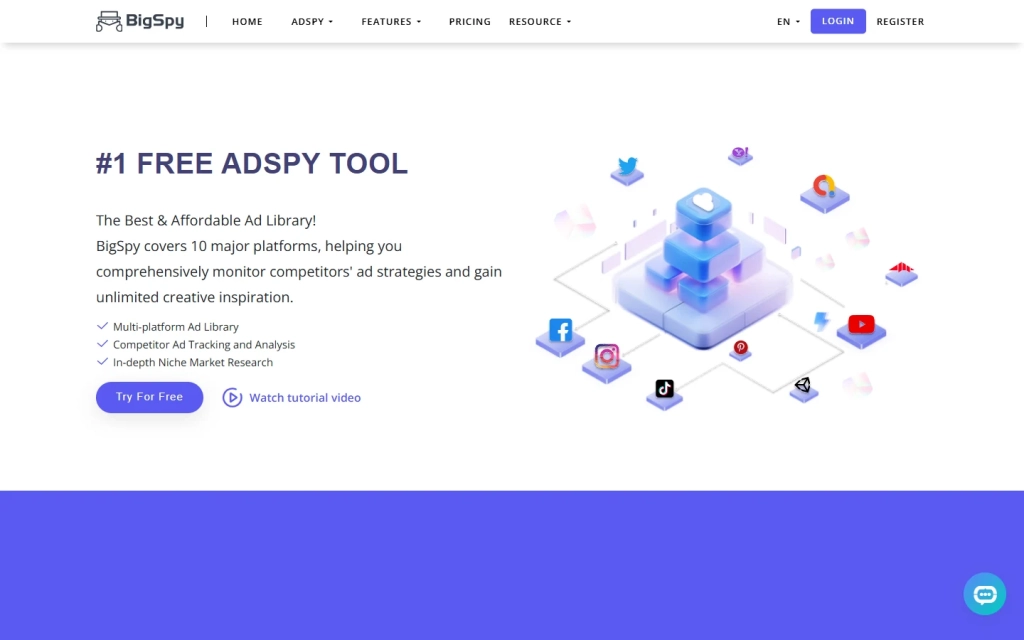
BigSpy gives you plenty of ads to browse without the cost of an enterprise platform. Facebook, Instagram, YouTube, and TikTok are covered, along with several other networks. For an ecommerce seller, dropshipper, affiliate, or small performance team, that’s a useful collection to start with. You can compare how competitors write their ads, look for product angles in your niche, or gather examples for creative work. Early on, having enough relevant references may be more pressing than detailed analysis.
Don’t base a subscription decision on the price quoted in an old review. BigSpy has promoted low-cost entry plans, but offers change, as do the allowances attached to them. Check the current pricing page.
The point at which you may need something else is when the research turns to budgets. BigSpy has less to offer for spend analysis, market share measurement, or enterprise competitive benchmarking. Tracking whether a competitor is increasing investment is a particular weak spot. A team can start with it for inspiration and later find it needs another source of data as its campaigns grow.
Zapier’s roundup of competitor analysis tools recommends bringing creative discovery and performance data together. BigSpy can supply the examples, but it won’t cover all the analysis. Its lower cost and coverage across platforms are useful while creative research is the main job. Allow for a second tool once you need stronger budget signals.
7. PowerAdSpy: Social ad research across multiple networks
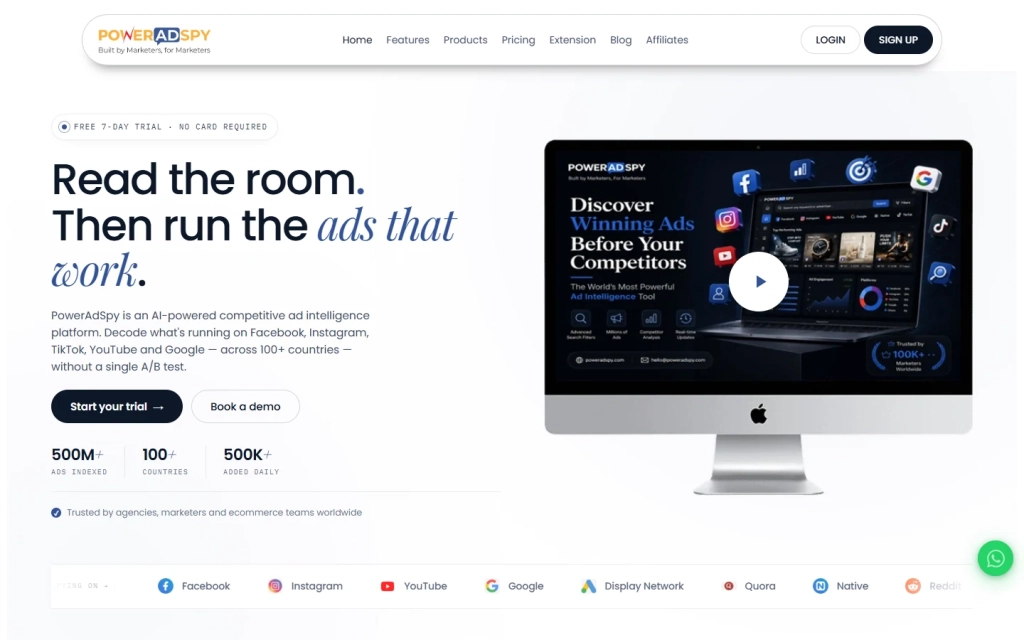
Before looking at PowerAdSpy, consider how many networks you research regularly. Its coverage includes Facebook, Instagram, Google, YouTube, native placements, Reddit, Quora, Pinterest, LinkedIn, and TikTok, with access varying by plan. If several of those are part of your work, having the results in one interface saves you from piecing them together across separate tools.
You can search the copy or start with the advertiser:
- A keyword search finds ads using the terms you want to investigate.
- An advertiser or domain search brings up the active ads tied to that brand or URL.
- Country, category, and call-to-action filters narrow the results to your campaign requirements.
- Brand tracking follows selected advertisers over time and notifies you when new creatives appear.
Check the plan details before paying. Higher tiers tend to include more advanced filters, a longer ad history, and estimated budget signals, but those boundaries can move when pricing changes. Confirm the current allowances with PowerAdSpy.
If all your research happens on Meta, the free Meta Ad Library already covers that ground. You would have less reason to pay for PowerAdSpy’s other networks. The stronger case is regular research across channels, especially for ecommerce and direct-to-consumer teams comparing activity on social, display, and community platforms.
Having those networks together doesn’t make PowerAdSpy an enterprise spend-modeling tool. It remains primarily a way to discover and research ads. For detailed changes in competitor budgets, you would still need a platform with deeper spend analysis alongside it.
8. SocialPeta: Global ad intelligence for apps, games, and ecommerce
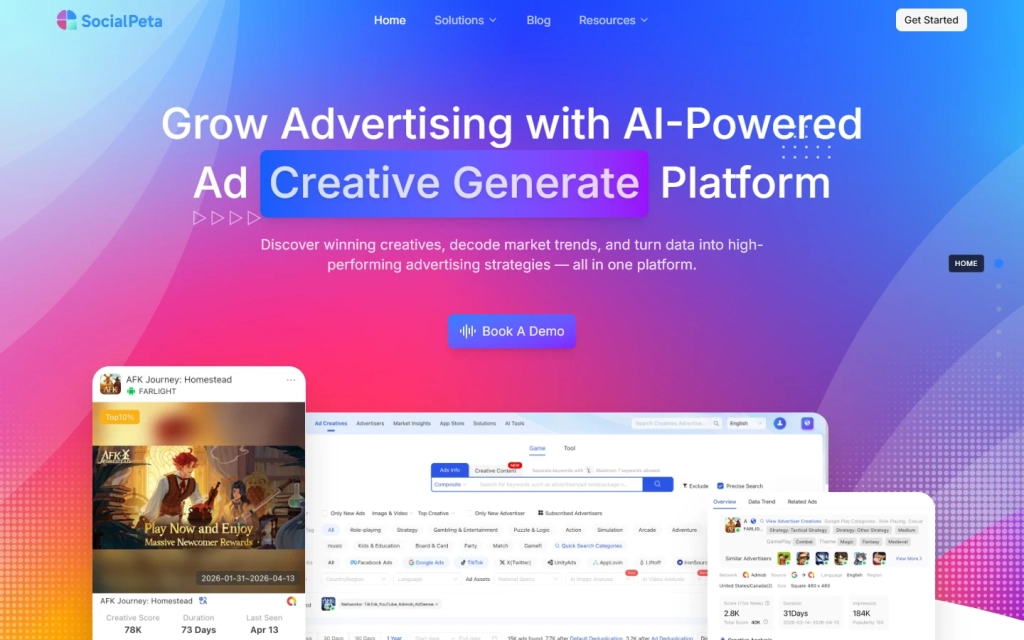
SocialPeta is worth considering when competitor research spans countries as well as channels. Its ad and advertiser database covers a wide range of markets, with advertiser activity trends, channel comparisons, app category breakdowns, and ecommerce insights alongside the creatives. A larger ecommerce brand planning international expansion can study where competitors are investing. App marketers can look for creative patterns developing in other regions before those approaches become widespread.
The combination of creative and market information is part of its appeal. AgencyAnalytics’ review of competitor analysis tools describes a growing preference in 2026 for platforms that offer both, particularly among teams operating at scale.
Smaller direct-to-consumer teams may find less reason to use all of it. SocialPeta has a strong focus on mobile games and apps, and the amount of information in the interface reflects the complexity of those markets. If you need creative examples from one or two platforms, a lot of that detail may be unnecessary. Pricing also requires a visit to the official site or a conversation with the team, so allow time for that when comparing options.
Consider who will use the market data before subscribing. SocialPeta rewards a global growth or app marketing team that can turn those findings into campaign decisions. Without the time and workflow to do that, its breadth becomes harder to justify.
Choosing your ad intelligence stack
The eight platforms above answer different research needs. Choosing between them starts with how your team uses competitor data, rather than which product lists the most features.
Look at spend and reach alongside creative examples. Run duration and the number of placements help you assess whether a competitor’s campaign is worth studying. Estimated budget trends add another part of the picture. A saved screenshot gives you less basis for a decision on its own.
Your main advertising channel should narrow the selection. If 80% of your budget goes to Meta, your research needs will differ from those of a team splitting spend between TikTok and YouTube. Detailed coverage of the channel you use most can be more useful than a larger index when decisions have to be made quickly.
Then consider capacity. Gartner reports marketing technology utilization at 49%, less than half of the tools’ available capacity. Adding a subscription gives an already stretched team another source to maintain and review. It doesn’t create the time to use it.
Research also needs a route into production. Without a brief, testing calendar, or production schedule, collecting competitor ads can become an end in itself. HubSpot’s review of competitor monitoring tools links stronger returns from research to the teams that connect it directly with creative production. Decide how that connection will work before building another database of references.
Average marketing technology utilization: 49%, according to Gartner.
Choose tools for the channels where you spend, and keep the workload within what your team can act on. Many teams will get more from making better use of an existing subscription than from adding another one.
What performance teams need in 2026
Rising CPMs across paid social and display make creative instinct alone a less comfortable basis for campaign decisions. Competitor data lets you see where budgets are moving and which ads continue to attract spend and engagement. Whether you’re using a broad discovery database or an enterprise platform, that information gives you a stronger basis for decisions than working without it. A library search starts the process; regular tracking makes the findings useful beyond that first visit.
For mid-market ecommerce brands, the challenge is getting enough analytical detail without committing to work that requires a much larger team. PrimeSpy brings spend signals, creative performance data, and multiple platforms together at a scale and price those brands can use. A dedicated analyst isn’t required to turn the data into something useful for a campaign. The emphasis on platform fit in Atria’s reviews and Klaviyo’s roundup of advertising platforms is relevant here: features matter when they support the work your team needs to do. PrimeSpy’s mix of accessibility and depth makes it a strong option for performance-focused ecommerce teams.
Before choosing an annual plan, check where your own budget goes and where competitors are active. Compare those channels with the platform’s coverage, then use a trial or demo to see how the research fits into your routine.
Start your PrimeSpy trial and bring competitor ad data into planning for your next campaign.