5 Best Dropshipping Niches for 2026: High-Margin Categories for Performance Marketers
- Author
- PrimeSpy Research Team
- Published
- Aug 4, 2026

Summary: The best dropshipping niches for 2026 are shifting toward specialized, high-margin categories with strong creative longevity and repeat-purchase potential. This guide highlights biohacking, premium pet wellness, personalized nutrition, eco-tech, and dopamine decor, then explains how ad spend signals, creative longevity, and funnel research help validate winning products before launch.
Is Dropshipping Still Profitable in 2026?
The short answer is yes — but not in the way it worked five years ago. The global dropshipping market is valued at $543.53 billion in 2026 and is projected to reach $1.25 trillion by 2030, according to Grand View Research. That trajectory does not signal a dying model. It signals a maturing one, and maturity rewards operators who adapt.
The old playbook is dead. Flooding a general store with cheap, commoditized products and running broad Facebook ads no longer generates sustainable margins. Shipping delays, rising ad costs, and consumer skepticism have eroded that approach. What replaced it is a fundamentally different strategy built around specialized micro-niches — tightly defined audiences with specific problems, buying language, and demonstrable willingness to pay a premium for the right solution.
The new metric separating profitable stores from struggling ones is creative longevity — the ability of a product and its surrounding content to stay compelling across multiple ad cycles without immediate fatigue. Generic products burn through creative budgets fast. Niche products anchored to a genuine identity or lifestyle generate organic conversation, repeat creative angles, and stronger return on ad spend over time.
2026 is shaping up as the year of the professional dropshipper. Barriers to entry have risen, which is actually good news for operators willing to treat this as a real business. Sourcing relationships, branded packaging, post-purchase retention, and platform-specific creative strategy are now table stakes — not differentiators. The hobbyist approach has largely self-selected out of the market.
Identifying the best dropshipping niches for 2026 means looking beyond trend reports and toward categories with structural tailwinds: growing consumer awareness, high average order values, and creative angles that perform consistently on paid and organic channels alike.
The niches covered in this list were selected specifically because they meet all three of those criteria — starting with one of the fastest-growing intersections of technology and personal wellness.
1. Biohacking and Sleepmaxing Technology
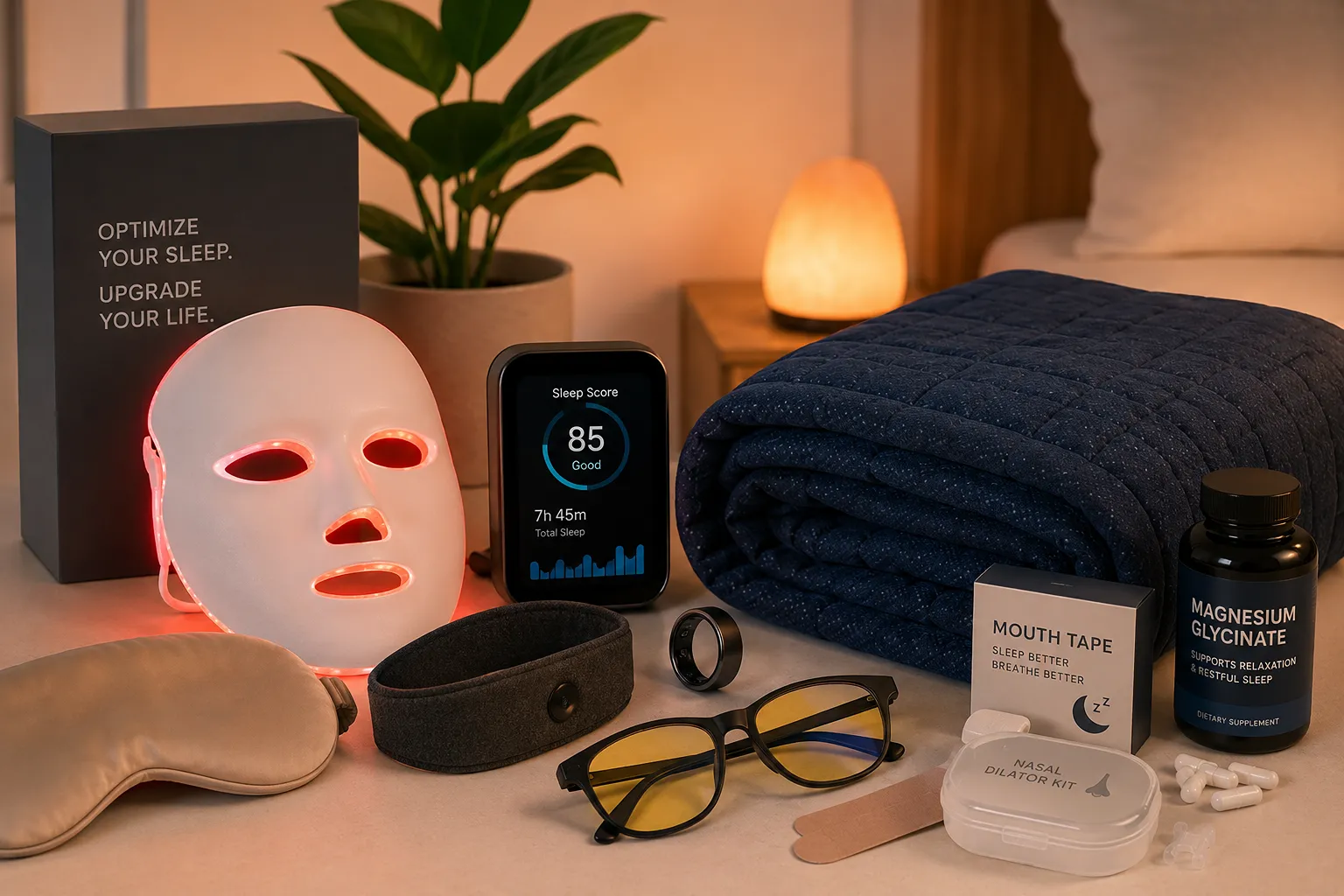
Among the top dropshipping niches 2026 has surfaced, biohacking and sleepmaxing stand out for their explosive consumer demand and exceptional margin potential. Sleepmaxing — the practice of obsessively optimizing sleep quality through devices, supplements, and environmental tools — sits at the intersection of wellness culture and performance psychology. It is a fast-growing subset of the broader biohacking movement, and it is pulling in a demographic that actively researches, spends, and shares.
The product opportunity here is concrete. Consider items like:
- Red-light therapy masks — wearable LED devices targeting skin repair and circadian rhythm regulation
- Smart sleep trackers — rings, headbands, and under-mattress sensors that generate personalized sleep data
- Gravity blankets and cooling sleep systems — tactile tools with strong visual unboxing appeal
- Blue-light blocking glasses — low-cost entry products with high perceived value
- Mouth taping and nasal breathing kits — viral micro-products with near-zero ad spend required
What makes this category particularly attractive for performance marketers is the creative ceiling. Red-light masks photograph dramatically. Sleep trackers generate data-driven content. Both product types perform well in before-and-after formats on TikTok and Meta, where health transformation content consistently earns organic reach before you spend a dollar on paid distribution.
Margin potential is equally compelling. High-ticket micro-niches like biohacking tools carry gross margins between 30% and 75% in 2026, meaning a single $120 red-light therapy mask can generate $36 to $90 in gross profit per unit. That kind of return per transaction allows you to sustain paid acquisition costs that would crush lower-margin categories.
Bold callout: Biohacking tools routinely achieve 30–75% gross margins — giving you room to scale paid ads profitably where commodity sellers cannot compete.
The takeaway: choose products with strong visual storytelling potential and margins above 40% to build a paid-acquisition engine that compounds.
And if biohacking appeals to your instinct for high-LTV customers, the next niche operates on a remarkably similar logic — but taps into an even more emotionally driven buyer.
2. Premium Pet Wellness and Humanization
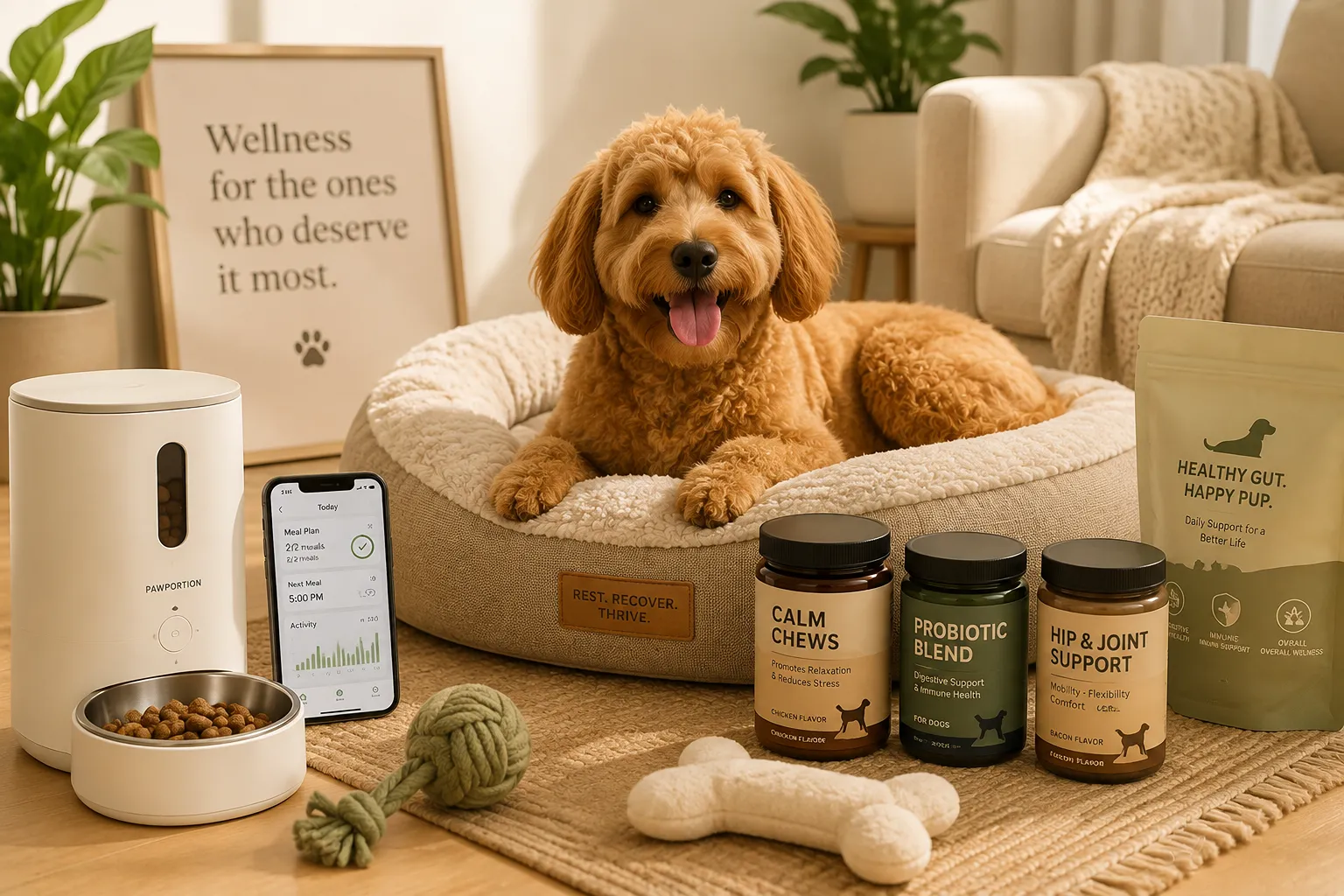
The biohacking trend covered in the previous section does not stop at the human body — it has extended directly into how pet owners care for their animals. The pet humanization ecosystem is one of the most compelling proofs that is dropshipping still profitable 2026 is a question with a clear answer: absolutely yes, when you position in the right niche. As Doba notes, the pet humanization ecosystem is driving demand for premium wellness goods that mirror human health trends — owners are spending like parents, not hobbyists.
Winning products in this space tend to fall into three high-margin categories:
- Orthopedic pet beds — memory foam and joint-support designs that mirror human sleep wellness products, commanding price points of $80–$180 and strong perceived value
- Specialized supplements — calming chews, probiotic blends, and hip-and-joint formulas that generate true repeat purchase behavior and subscription potential
- Smart feeders and health monitors — app-connected devices that track portion sizes, feeding schedules, and even activity levels, appealing to the data-driven pet parent segment
Recurring revenue is the structural advantage that separates pet wellness from one-time commodity pet supplies. Supplements, in particular, create a natural replenishment cycle that lifts customer lifetime value significantly without additional ad spend per order. A single acquired customer who subscribes to a monthly probiotic formula can generate four to six orders annually from one acquisition cost.
UGC (user-generated content) scales this niche faster than almost any other format. Pet content is inherently shareable — video reviews, unboxing clips, and before-and-after transformation content perform exceptionally on short-form video platforms. One practical approach is to seed products with micro-influencers whose audiences skew toward health-conscious pet owners, then repurpose that content as paid ad creative.
The key takeaway: build your pet wellness store around products with natural replenishment cycles, and let UGC do the heavy lifting on creative — your customer acquisition costs will thank you.
The next niche on this list takes the personalization trend in a direction that is arguably even more data-rich: the world of personalized nutrition and gut health, where repeat buyers account for a disproportionately high share of total revenue.
3. Personalized Nutrition and Gut Health

Repeat buyers are the engine of this niche. The personalized retail nutrition market is projected to reach $5.14 billion in 2026, with repeat recommendations accounting for 46.3% of total revenue — a figure that signals something most dropshippers overlook: this is not a one-and-done purchase category. That 15.38% CAGR is not driven purely by new customer acquisition. It is powered by subscription refills, loyalty-driven reorders, and algorithm-backed product recommendations that bring buyers back to the same store. For performance marketers, understanding how to find winning dropshipping products in this space means prioritizing items that naturally generate a second and third order, not just a first click.
Gut health and immunity are the strongest sub-niches entering 2026. Consumer awareness around the gut-brain axis, microbiome diversity, and immune resilience has shifted from niche wellness circles into mainstream purchasing behavior. Products such as targeted probiotic blends, digestive enzyme supplements, and prebiotic fiber powders now carry the same casual-purchase familiarity as a daily multivitamin. And because these products address ongoing, chronic health goals rather than one-time fixes, customer lifetime value (LTV) is structurally high. A store that converts a buyer onto a 30-day gut protocol is well-positioned to retain that buyer across multiple purchase cycles — provided the post-purchase experience reinforces trust.
Data-driven ad creative is non-negotiable here. Generic “feel better” messaging underperforms against creative that speaks to a specific health goal: bloating relief, energy metabolism, immune support during travel season. Segmenting audiences by health intent — and matching ad copy to that intent — consistently drives stronger conversion rates and lower cost per acquisition. The personalized nutrition buyer responds to precision, not broad wellness claims.
The core takeaway: build your nutrition store around high-LTV repeat products and let data-driven creative do the targeting — that combination is what separates sustainable stores from one-hit campaigns.
4. Eco-Tech and Circular Economy Goods
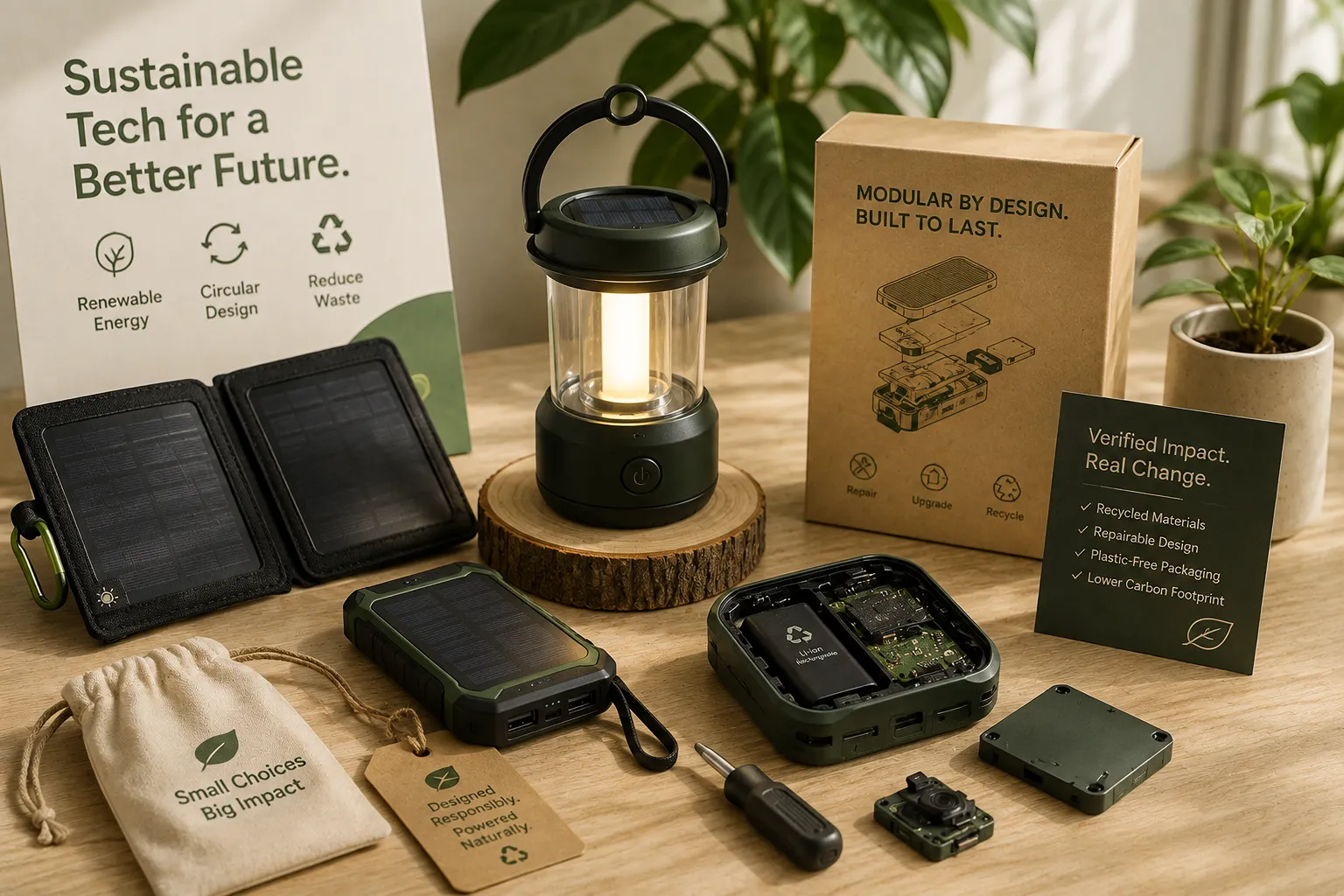
Among the most profitable dropshipping niches in 2026, Eco-Tech stands out for combining genuine consumer demand with strong margin potential. The core product set includes solar-powered gadgets (portable solar chargers, solar-panel camping lanterns, solar irrigation kits) and modular electronics designed to be repaired, upgraded, or recycled — think swappable-battery devices and component-based smart home hardware. According to Doba, eco-tech and circular economy goods are emerging as top-tier niches precisely because consumers are shifting toward sustainable modularity rather than disposable convenience.
Gen Z and Millennial buyers are the primary engine behind this shift. These two cohorts actively research product lifecycles before purchasing, and they reward brands that demonstrate verifiable environmental claims. The circular economy model — where products are built to be returned, refurbished, or repurposed — aligns directly with their purchasing values. And critically, this is not a soft preference; it influences cart decisions.
“I will pay more for something I know I can repair or recycle. What I will not do is pay more for a green logo that means nothing.” — A sentiment consistently echoed across sustainability-focused consumer forums and purchase-behavior research.
Marketing without greenwashing is where many dropshippers lose credibility — and where you can differentiate. Transparent creative tends to work better here: show real material certifications, actual energy-output specs, and honest comparisons to conventional alternatives. Avoid vague claims like “eco-friendly” with no supporting data. Buyers in this niche are skeptical and informed.
One practical advantage this niche delivers is lower return rates. High-quality eco-goods — particularly modular electronics — attract buyers who research thoroughly before purchasing, which means fewer impulse buys and fewer regret-driven returns. Lower return rates protect your margins and improve your supplier relationships over time.
If you sell in this niche, lead with proof over promises — verified specs and third-party certifications will outperform any lifestyle-focused creative.
That same visual storytelling instinct applies even more aggressively in the next niche, where the product itself is the content.
5. TikTok Shop Powerhouse: Dopamine Decor
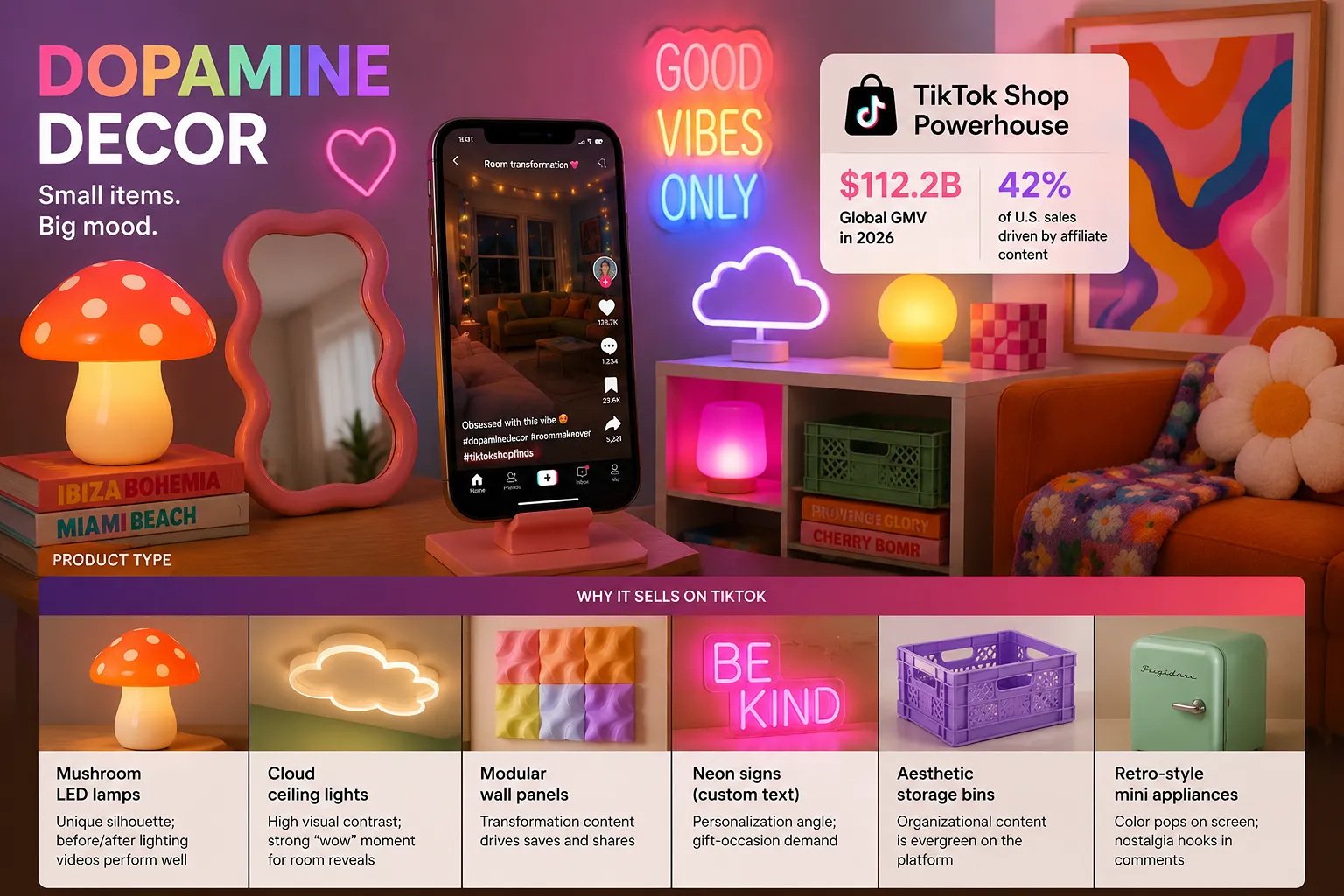
Dopamine Decor is the design movement built around bold colors, playful shapes, and modular home items that trigger an immediate emotional response. Think mushroom lamps, neon LED strips, cloud-shaped mirrors, and maximalist wall art — products that are visually loud, instantly shareable, and inexpensive enough to impulse buy. What makes this niche particularly powerful for dropshippers is that the product _is_ the content. You do not need polished studio photography; a 15-second room transformation video does the selling for you.
The commercial tailwind behind this trend is enormous. TikTok Shop’s global GMV is projected to reach $112.2 billion in 2026, with affiliate content driving 42% of U.S. sales. That second figure is critical for media buyers: it means a large share of conversions happen organically through creator posts, not paid impressions. Dopamine Decor products are disproportionately favored by lifestyle and home-decor creators because they generate genuine audience reactions — saves, shares, and “where did you get that?” comments that compound reach without additional ad spend.
| Product Type | Why It Sells on TikTok |
|---|---|
| Mushroom LED lamps | Unique silhouette; before/after lighting videos perform well |
| Cloud ceiling lights | High visual contrast; strong “wow” moment for room reveals |
| Modular wall panels | Transformation content drives saves and shares |
| Neon signs (custom text) | Personalization angle; gift-occasion demand |
| Aesthetic storage bins | Organizational content is evergreen on the platform |
| Retro-style mini appliances | Color pops on screen; nostalgia hooks in comments |
For paid media buyers, the scroll-stop factor here is unusually high. Bright, saturated visuals interrupt a neutral feed naturally, and the products lend themselves to before/after and “shop with me” formats that tend to outperform standard product ads. However, trend velocity in this niche is fast — what sells in Q1 may stall by Q3, which means product rotation speed matters as much as initial selection.
To stay ahead of the curve in a trend-driven niche like this one, you need a systematic way to identify which specific products are scaling right now — which is exactly what the next section covers.
How to Find and Validate Winning Products
Before committing ad spend to any niche, performance marketers need a repeatable validation framework. Guessing based on gut feel or trending hashtags is how budgets disappear. The move is from guessing to analyzing — using multi-platform data to confirm that real money is already flowing before you enter a category.
Follow this three-step process:
- Track ad spend and reach metrics across competitors. When a competitor is scaling, their ad spend and estimated reach reflect it. Look for campaigns showing significant reach growth week over week. A product with a single viral moment looks very different from one sustaining consistent spend over time — and you want the latter.
- Filter for creative longevity. An ad that has run for 30 or more days is not an accident. It means the creative is converting profitably enough that the advertiser keeps funding it. Creative longevity is one of the most reliable signals of a validated offer. Prioritize finding these long-running ads over chasing anything that spiked last week and disappeared.
- Reverse-engineer the full funnel. Do not stop at the ad itself. Follow the click to the landing page, study the offer structure, and note the price point, guarantee, and upsell path. What typically happens is that the most successful dropshipping stores win not because of the product alone, but because of a tightly optimized funnel built on what already converts.
PrimeSpy is the analytical layer built for exactly this process. As the platform puts it: “See winning players. Do what they do. Ace your ad campaigns.” Rather than building creative strategy in isolation, PrimeSpy lets you identify which competitors are scaling, which