18 Types of Advertising with Examples: A Complete Guide for Businesses
- Author
- PrimeSpy Research Team
- Published
- Aug 25, 2026

Summary: Explore 18 types of advertising, from print, TV, and outdoor to paid search, social media, CTV, influencers, and retargeting. The article explains when each format works best, gives real examples, and helps businesses choose channels based on audience, intent, budget, and sales cycle.
Advertising is no longer a simple choice between print, TV, and a few digital channels. The latest IAB/PwC Internet Advertising Revenue Report puts U.S. digital ad revenue at $294.6 billion in 2025, up 13.9% year over year. At the global level, dentsu forecasts advertising spend will pass $1 trillion in 2026, with digital taking 68.7% of total investment.
That growth creates a practical problem. Businesses have more channels, formats, placements, and targeting options than ever, but not every ad type fits every goal. This guide covers advertising and types of advertising from a business point of view: what each channel does, when it works, and where it makes sense to use it.
TL;DR: the main types of advertising
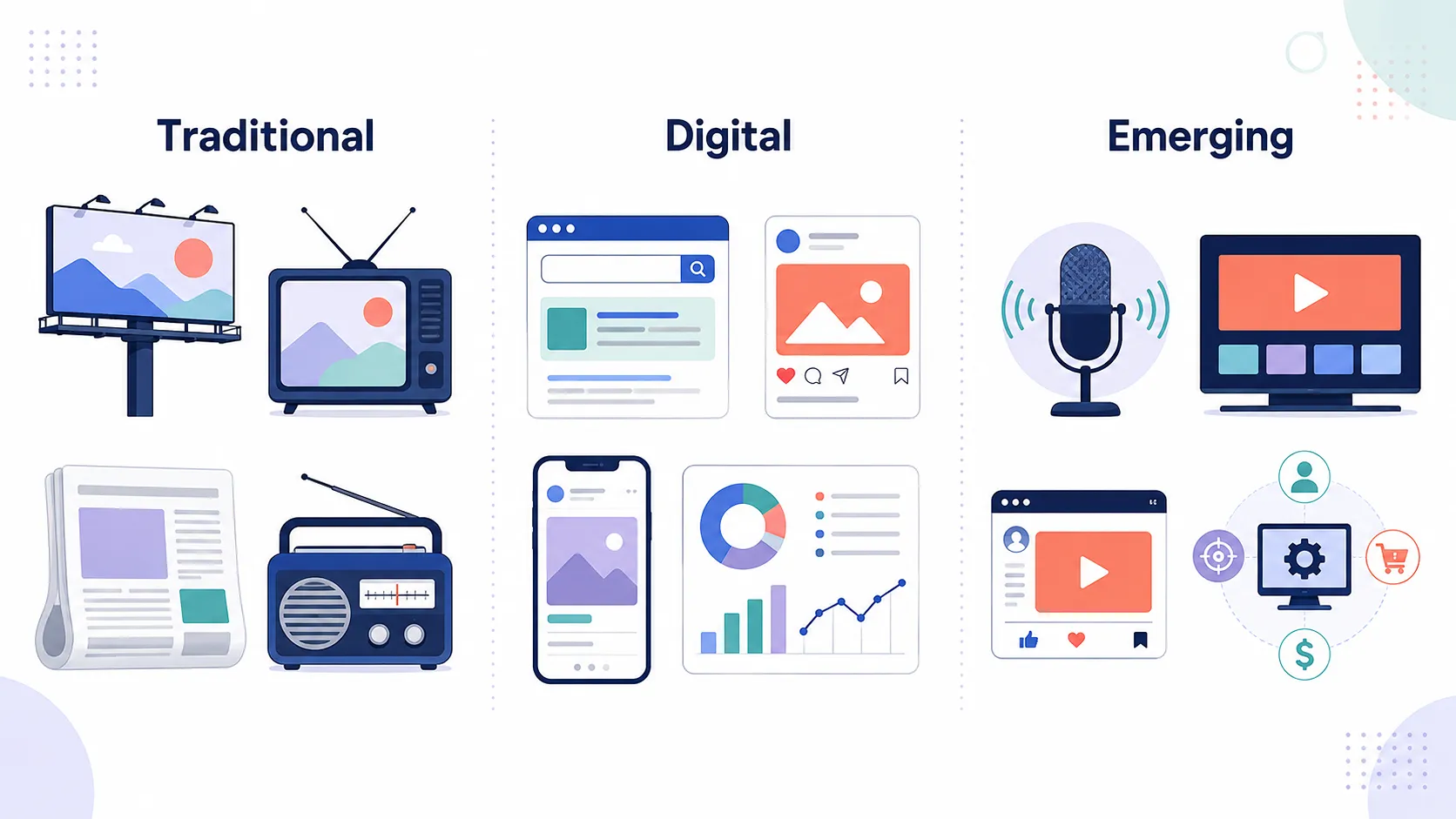
The main types of advertising can be grouped into traditional advertising, digital advertising, and emerging advertising. Traditional channels help with broad reach and local awareness. Digital channels are usually easier to target, test, and track. Emerging formats, such as connected TV, creator partnerships, and digital out-of-home, sit between brand building and performance marketing.
- Use paid search when people already know what they want.
- Use social media, video, and influencer ads when demand needs to be created.
- Use print, radio, outdoor, and direct mail when geography matters.
- Use retargeting when you already have website visitors or warm audiences.
The best choice depends on your audience, budget, sales cycle, and the action you want people to take.
What is advertising?
Advertising is the paid promotion of a product, service, brand, event, or idea to a target audience. It is one part of marketing, not the whole marketing function. Marketing also includes research, positioning, pricing, content, customer experience, and sales support.
An advertisement, often called an ad, is the actual message or creative asset used inside advertising. A banner ad, search ad, TV commercial, podcast sponsorship, or billboard can all be advertisements. For this article, the focus is not on the ad asset alone. The focus is on the types of advertising a business can choose when it wants to reach customers, generate leads, or build demand.
Main categories of advertising
Most advertising types fall into three categories: traditional, digital, and emerging. This grouping keeps the topic easier to understand because the channels behave differently. A billboard is not planned or measured like a Google search ad. A podcast sponsorship is not the same as a TikTok video ad, even if both use audio or creators.
Traditional advertising is useful when you need broad exposure or local presence. Digital advertising is stronger when you need targeting, testing, and measurable response. Emerging advertising often blends both worlds. It uses newer platforms, automated buying, streaming media, or creator-led distribution to reach audiences in less conventional ways.
| Category | Common channels | Best fit | Main limitation |
|---|---|---|---|
| Traditional advertising | Print, TV, radio, outdoor, direct mail | Local awareness, mass reach, brand recall | Harder to target and measure |
| Digital advertising | Search, social, display, native, video, email | Lead generation, ecommerce, retargeting | Needs ongoing testing and tracking |
| Emerging advertising | CTV, DOOH, creators, programmatic, AI-assisted ads | Growth campaigns, new audiences, mixed brand and performance goals | Can require stronger creative and media planning |
Types of advertising with examples
There are many types of advertising, but most businesses do not need all of them. A local dental clinic, a B2B software company, a clothing brand, and a national beverage company will choose different channels because their customers behave differently.
The sections below explain 18 different types of advertising in plain terms. Each one includes a short example and a practical view of when it works best. Treat this as a decision guide, not a checklist to complete. The goal is to find the few channels that match your buyer’s intent, attention habits, and path to purchase.
1. Print advertising
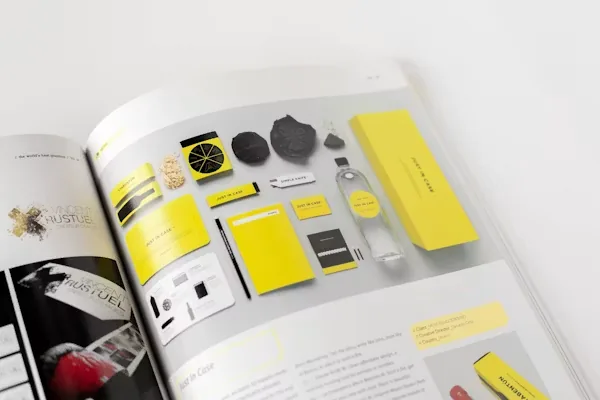
Print advertising appears in newspapers, magazines, brochures, flyers, catalogs, and other physical materials. It works best when the publication or distribution area matches the audience you want to reach. A local restaurant might place a coupon in a neighborhood magazine, while a luxury watch brand might advertise in a business or lifestyle publication.
Print is less trackable than most digital ads, but it can still work when trust, location, or audience fit matters. It is often useful for events, local services, real estate, healthcare, education, and products aimed at older or specialized audiences.
2. Television advertising
Television advertising uses commercials shown on broadcast or cable TV. It is expensive compared with most digital channels, but it still gives brands broad reach, strong visual impact, and repeated exposure. A consumer goods company might use a 30-second TV spot to introduce a new product to a national audience.
TV works best when the goal is awareness rather than immediate clicks. It suits brands with larger budgets, broad customer groups, and a message that benefits from sound, motion, and emotion. The downside is simple: production and media costs can rise quickly.
3. Radio advertising
Radio advertising uses short audio spots on local, regional, or national stations. It is often used by car dealerships, restaurants, healthcare providers, home services, and event organizers. A local HVAC company, for example, might run morning drive-time ads before a summer heatwave.
Radio can be effective because listeners often hear the same message many times. The format depends heavily on a clear offer, a memorable voice, and strong repetition. It does not provide visuals, so it works better for simple messages than for products that need to be shown.
4. Outdoor advertising
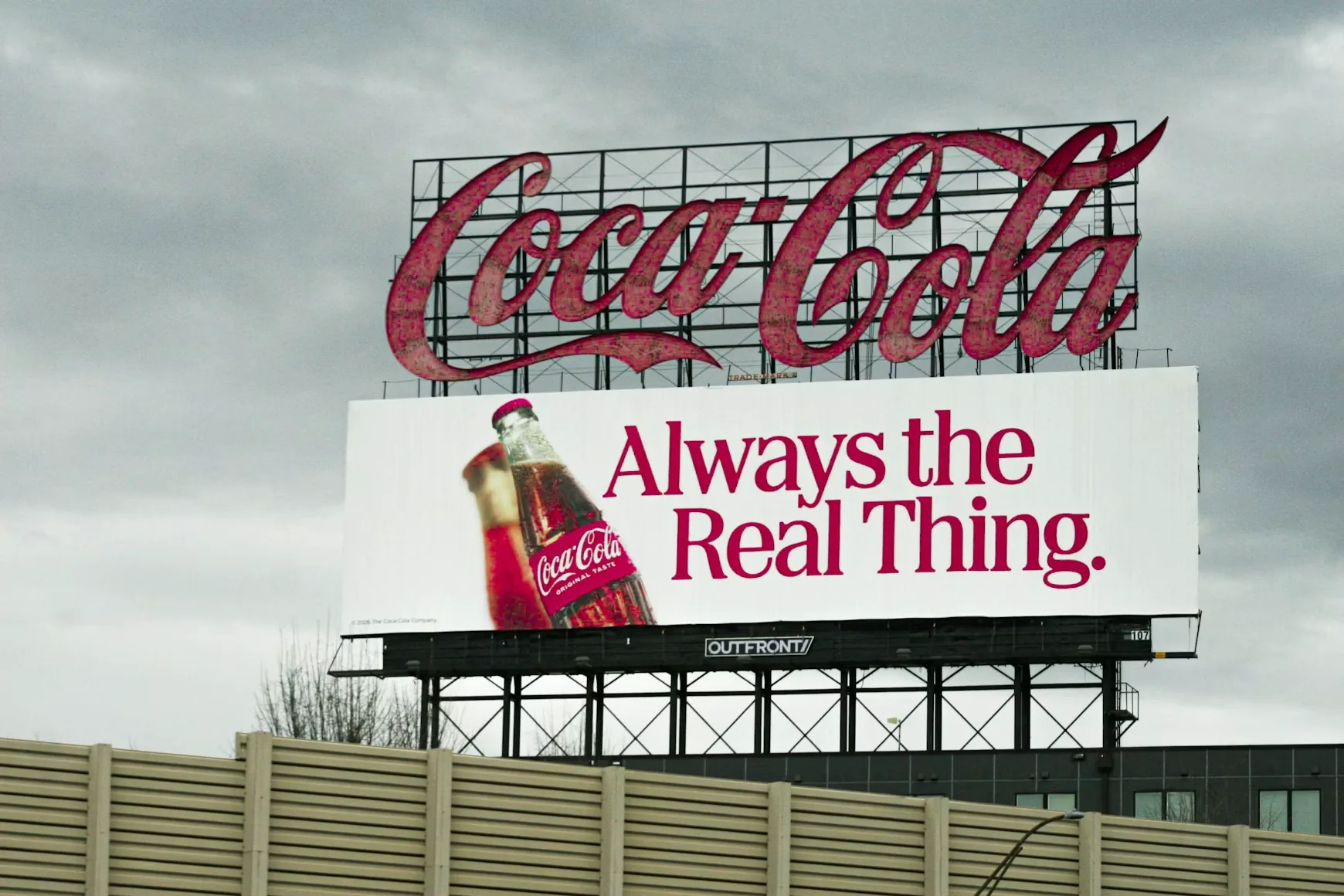
Outdoor advertising includes billboards, transit ads, bus shelters, posters, airport displays, and signage in high-traffic locations. It is built for quick recognition. A gym might place a billboard near office buildings with a short message and a strong local offer.
Outdoor ads work well when location matters. They can help people remember a brand, visit a nearby store, or notice a product launch. They are less useful for detailed explanations because people only see them for a few seconds. A strong outdoor ad usually needs one idea, one visual, and one clear next step.
5. Direct mail advertising
Direct mail advertising sends physical promotional materials to homes or businesses. Common formats include postcards, catalogs, letters, coupons, and sample packs. A dental clinic might mail a first-visit discount to households within a few miles of its office.
Direct mail can feel old-fashioned, but it still has a place when geography and household targeting matter. It gives people something physical to keep, which can help with local services and higher-value purchases. The main risk is waste. Poor targeting, weak offers, or low-quality mailing lists can make the channel expensive fast.
6. Paid search advertising
Paid search advertising places ads on search engines when people look for specific keywords. Google Search ads are clearly labeled and shown when the system finds them relevant to the query. A plumber might bid on “emergency plumber near me” to reach people with urgent intent.
This type of advertising is strong because it captures demand that already exists. It works for local services, ecommerce, SaaS, legal services, healthcare, and B2B lead generation. The tradeoff is competition. Valuable keywords can be expensive, and weak landing pages can waste the traffic.
7. Social media advertising
Social media advertising runs on platforms such as Facebook, Instagram, TikTok, LinkedIn, X, Pinterest, and Snapchat. These ads can appear as images, videos, carousels, stories, reels, sponsored posts, or lead forms. Meta ad placements can span Facebook, Instagram, Messenger, and Audience Network.
Social ads are useful when people may not be actively searching yet. A skincare brand can show a short video to people interested in beauty routines, while a B2B company can use LinkedIn ad formats to reach buyers by role or company type. Creative quality matters a lot here.
8. Display advertising
Display advertising includes banner ads, image ads, rich media ads, and programmatic placements across websites, apps, and ad networks. A SaaS company might run display ads on industry websites to promote a report or webinar.
Display is useful for awareness, retargeting, and staying visible during longer buying cycles. It usually has lower click-through rates than search ads because the audience is not always in buying mode. Still, it can support other channels by keeping your brand familiar. The creative should be simple, visual, and tied to a clear landing page.
9. Native advertising
Native advertising is paid content designed to match the look and feel of the platform where it appears. It can take the form of sponsored articles, recommended content, in-feed placements, or paid editorial-style features. A fintech company might sponsor an article about budgeting on a personal finance site.
Native ads work best when the product needs education, not just a quick offer. They can build trust because the content feels closer to what the reader already came to consume. The risk is weak disclosure or thin content. Native advertising should be useful even when readers know it is sponsored.
10. Video advertising
Video advertising includes YouTube ads, social video ads, pre-roll ads, in-stream ads, short-form clips, and video placements on publisher sites. It can show how a product works, tell a brand story, or demonstrate a before-and-after use case.
Video is strong when motion helps the message. A software company can show a workflow in 20 seconds. An ecommerce brand can show the product in use. The challenge is attention. The first few seconds carry a lot of weight, especially on mobile and social platforms. Clear framing beats polished but slow creative.
11. Mobile and in-app advertising
Mobile and in-app advertising reaches users on smartphones and inside apps. Formats include mobile banners, interstitial ads, rewarded video ads, app install ads, and placements inside mobile games or utility apps. A fitness app might use app install ads to reach people browsing health content on mobile.
This channel works well when the conversion also happens on a phone, such as installing an app, ordering food, signing up for a trial, or buying a low-friction product. The main risk is interruption. If the ad blocks the user experience or loads poorly, it can hurt the brand instead of helping it.
12. Email advertising
Email advertising is different from sending your own email newsletter. It usually means paying for placement inside someone else’s newsletter or email list. A B2B software company might sponsor a newsletter read by operations leaders, while a course creator might sponsor an email sent to freelancers.
This channel can work well when the list has a clear audience and high trust. It is especially useful for niche B2B offers, events, reports, and products that need a short explanation. The quality of the list matters more than its size. A small newsletter with the right readers can outperform a large generic list.
13. Podcast and audio advertising
Podcast and audio advertising includes host-read podcast sponsorships, produced audio spots, streaming audio ads, and branded segments. A project management tool might sponsor a podcast for startup founders, while a local business might run ads on streaming audio in a specific city.
Audio works because listeners often trust the host or spend focused time with the content. IAB reported podcast revenue at $2.9 billion in 2025 within its broader digital ad revenue data, which shows the format is no longer a fringe channel. The main challenge is attribution. Promo codes and dedicated landing pages help, but measurement is not always perfect.
14. Influencer advertising
Influencer advertising uses paid partnerships with creators who already have an audience. The creator might post a product review, tutorial, short video, livestream mention, or sponsored story. A fitness brand might pay a trainer to demonstrate its equipment in a real workout.
This type of advertising works when the creator’s audience trusts their taste or expertise. It is especially common in beauty, fashion, fitness, food, travel, apps, and consumer tech. The biggest mistake is choosing creators by follower count alone. Audience fit, content quality, and past engagement usually matter more.
15. Retargeting advertising
Retargeting advertising shows ads to people who have already interacted with your business. They may have visited your website, viewed a product, watched a video, opened an email, or added an item to a cart. An ecommerce store might show a reminder ad to someone who looked at running shoes but did not buy.
Retargeting is effective because the audience is warmer than a cold audience. It works for ecommerce, SaaS trials, travel, education, and any product with a longer decision process. The message should match the behavior. A cart abandoner does not need the same ad as a first-time blog reader.
16. Connected TV advertising
Connected TV advertising, often called CTV, appears on streaming TV services and devices such as Roku, Hulu, YouTube TV, and smart TV apps. It gives brands a TV-like viewing experience with more digital-style targeting and reporting.
CTV is useful for brands that want high-quality video reach without relying only on traditional TV buys. IAB reported digital video revenue at $78 billion in 2025, with CTV included in the broader video growth story. This format suits brands with strong video creative, clear audience segments, and enough budget to test beyond social video.
17. Digital out-of-home advertising
Digital out-of-home advertising, or DOOH, uses digital screens in physical spaces. You see it on digital billboards, airport screens, mall displays, elevators, taxis, gyms, and retail media screens. A food delivery app might run ads on office lobby screens before lunchtime.
DOOH combines location value with flexible creative. Brands can change messages by time of day, location, weather, or event context. It works well for local launches, city-level campaigns, entertainment, retail, apps, and brand reminders. Like traditional outdoor, it is usually better for awareness than direct response, unless paired with search, social, or QR-based follow-up.
18. Product placement
Product placement puts a brand or product inside entertainment, media, games, videos, or creator content. A character might use a specific phone, drink a certain beverage, drive a branded car, or show a software tool during a tutorial.
This form of advertising works because the product appears inside a story rather than beside it. It can feel more natural than a standard ad, especially when the placement fits the scene. The downside is control. Brands may have less control over context, timing, and direct response. Product placement is strongest for consumer brands, tech products, lifestyle categories, and entertainment-linked campaigns.
How to choose the right type of advertising
Choosing the right advertising type starts with the buyer’s situation, not the channel. If people already search for your product, paid search can capture that intent. If people do not know the category exists, video, social, influencer, or native advertising may do a better job of creating demand.
Budget also matters. A small business should not copy the media plan of a national brand. A startup should usually test measurable digital channels before buying expensive awareness media. A local service business may need a mix of search, direct mail, and outdoor because the buying decision is tied to location.
Use these filters before you choose a channel:
- Audience: Where do your buyers spend attention before they buy?
- Intent: Are they actively searching, casually browsing, or not aware yet?
- Budget: Can you afford the media cost and the creative work?
- Sales cycle: Do buyers decide in minutes, days, weeks, or months?
- Proof: Do you have examples, reviews, demos, or offers that make the ad believable?
If you collect competitor ad examples before planning campaigns, PrimeSpy can help you organize patterns across ads and channels in one place. Use it as research support, not as a reason to copy another brand’s creative.
Real-world advertising case studies
Real examples of advertising make these types easier to understand because strong campaigns often use more than one channel. A famous brand campaign may include video, outdoor, social media, packaging, PR, and creator content at the same time.
The useful lesson is not “copy Coca-Cola” or “copy Apple.” The useful lesson is to see how the channel choice matched the job. Some campaigns needed reach. Some needed participation. Some needed proof. Some needed a stronger emotional reason to pay attention. The best advertising type is the one that fits the behavior you want from the audience.
Coca-Cola: personalized packaging and social sharing
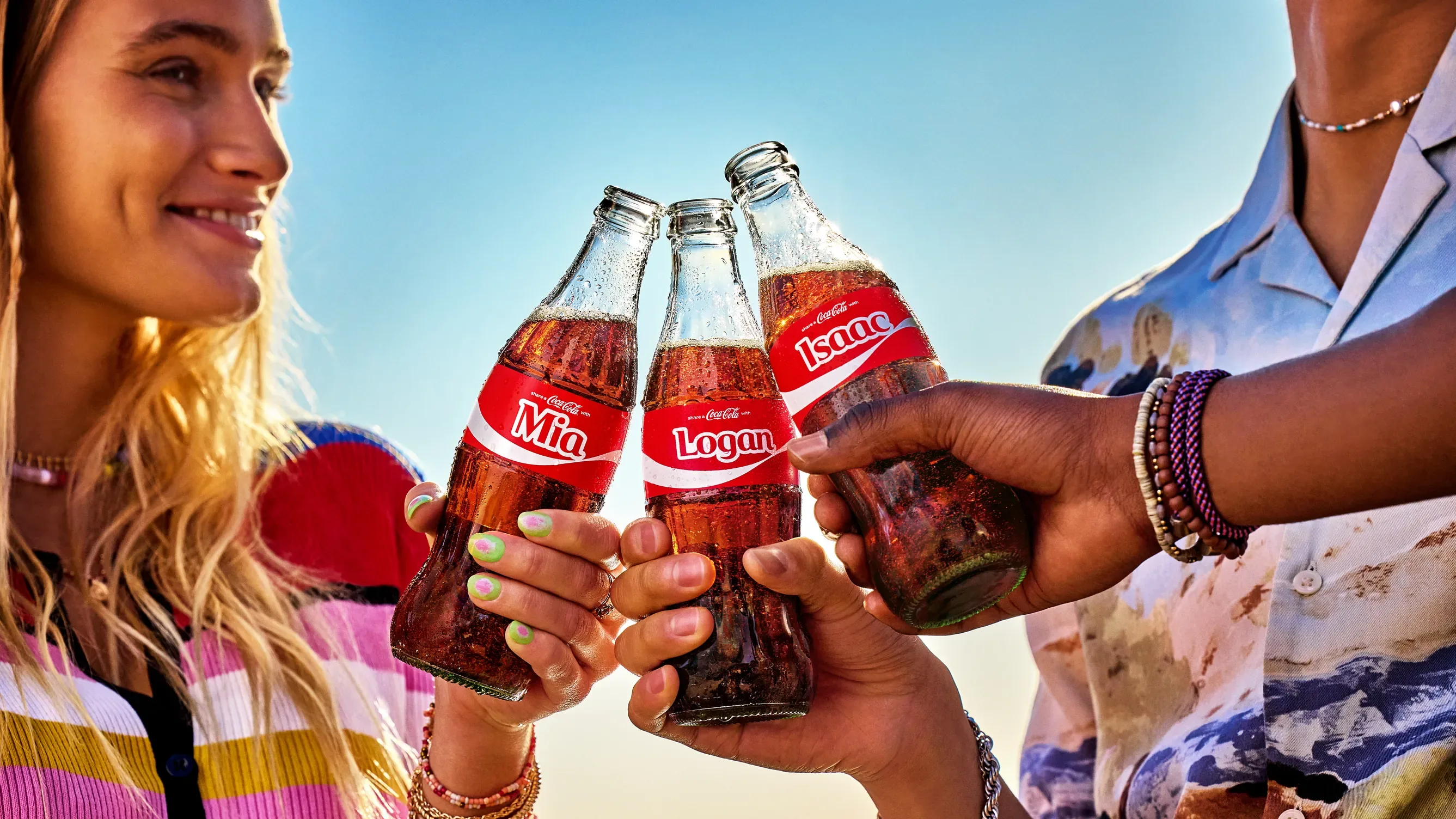
Coca-Cola’s Share a Coke campaign replaced its logo on bottles and cans with popular first names. The idea worked because the product itself became the ad. People could find a name, buy the bottle, gift it, and share it online.
The campaign connected print-like packaging, retail visibility, outdoor awareness, and social media sharing. It is a good example of advertising that did not depend on one channel. The product, the shelf, and the customer all helped distribute the message.
Nike: video advertising tied to brand belief
Nike’s Dream Crazy campaign used film, athlete stories, and a strong brand point of view. The ad was not only about shoes or apparel. It connected the “Just Do It” message to ambition, risk, and belief.
This case is useful because it shows when video advertising can do more than explain a product. Video works well when emotion, identity, and story matter. It also shows the tradeoff: purpose-led campaigns can create strong loyalty, but they can also divide audiences.

Airbnb: native storytelling with real guest moments
Airbnb’s Made Possible by Hosts campaign used real photographs from trips and turned them into a series of films. The campaign focused on the experience of staying with hosts, not just booking accommodation.
This is a strong example of native and video-led advertising because the creative felt close to user stories. It did not need a complex product explanation. It reminded travelers what the service makes possible: personal trips, homes, hosts, and memories.
Apple: outdoor proof through user-generated content
Apple’s Shot on iPhone campaign used photos taken by iPhone users and placed selected images on billboards, in stores, and online. The product benefit was easy to understand because the ad was the proof.
This is product advertising without much explanation. It works because the creative shows the outcome people want: better photos. It also connects outdoor advertising, social participation, retail, and digital sharing in a simple way.
Local business: direct mail, search, and retargeting
A local dental clinic could mail a new patient offer to nearby households, run paid search ads for “dentist near me,” and retarget visitors who checked the pricing page but did not book. None of those channels needs a national budget.
The lesson is fit. Direct mail creates local awareness. Search captures people with clear intent. Retargeting reminds warm visitors to act. For small businesses, a practical mix often beats one large awareness campaign.
Future trends in advertising
The future of advertising is not only about new formats. It is about how buying, creative, targeting, and measurement are changing. Dentsu expects programmatic advertising to account for more than four fifths of digital investment in 2026, while IAB reported creator advertising spend reached $37 billion in 2025.
That matters for businesses of all sizes. More ad buying will be automated. More creative will be tested in different versions. More audiences will be reached through creators, retail media, streaming platforms, and first-party data. The brands that win will still need the basics: a clear audience, a clear offer, and a message people understand quickly.
Watch these areas closely:
- AI-assisted creative: Faster ad variations, but still needs human judgment.
- Creator advertising: More brands will treat creators as ongoing media partners.
- CTV and streaming ads: Video will keep moving beyond traditional TV.
- Retail media: More ads will appear close to the point of purchase.
- Privacy-first targeting: First-party data and consent will matter more.
These trends do not make older channels useless. They make channel choice more important. A good billboard, search ad, creator post, or email sponsorship can still work when it fits the job.
Conclusion
The main types of advertising include traditional channels like print, TV, radio, outdoor, and direct mail, digital channels like paid search, social media, display, native, video, email, and retargeting, and newer formats like CTV, DOOH, influencer advertising, and product placement.
No single ad type is best for every business. Paid search is strong when buyers already have intent. Social and video are strong when people need to discover or understand the product. Outdoor, radio, and direct mail can still work when local reach matters. Creator, CTV, and native advertising can help when trust or storytelling matters.
Start with the customer, the goal, and the budget. Then choose the advertising type that makes the next action easier for the buyer.