5 Essential Types of Social Media Advertising for Performance Marketers
- Author
- PrimeSpy Research Team
- Published
- Sep 17, 2026

Summary: This article breaks down 5 key types of social media advertising for 2026: static images, short-form video, UGC ads, carousel/collection ads, and AI-driven dynamic creatives. It shows how each format supports awareness, trust, retargeting, product discovery, and scalable creative testing.
The 2026 Social Ad Landscape: Beyond Traditional Search
Someone discovering a brand no longer has to start with a search box. A quarter of consumers now go to social platforms first, ahead of traditional search engines. A media plan built around search alone misses a growing share of the moments when buyers begin forming a preference.
Social media advertising gives brands a paid route into that process. Advertisers bid for space in feeds, stories, and discovery surfaces; organic posting is a separate activity. The platforms are built around engagement, so they can work with signals that arrive before a search query: how long someone watches, what they save, and what they swipe past.
AI personalization uses those signals to predict purchase interest and serve ads that fit the feed. The opportunity is to create demand before people know what to search for. Choosing the format is part of deciding how to do that.
1. Static Image Ads: The Foundation of E-commerce Conversion
Static image ads have the longest history of driving ecommerce conversions among these formats. They give a media buyer a quick answer to an expensive question: does this message deserve a video budget? Images are fast to make and easy to test. Within days, a well-composed image can validate an angle; video can then amplify the message.
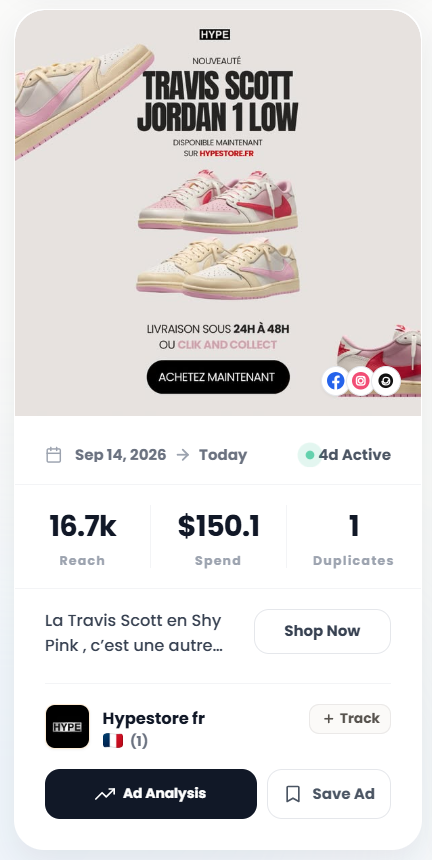
The image still has to do its job on a small screen. Put the product front and center, with a clean background and enough empty space to keep it distinct. Use the brand’s colors, a single focal point, and a high-contrast headline above the fold. Small details that look fine in the design file can disappear in a mobile feed. Anything competing with the product makes its value harder to see.
Retargeting is where static ads earn their highest return. The shopper has already visited the product page and has a stronger interest in buying. A price callout, a trust badge, or a limited-time offer can address what stands between that interest and a purchase.
Keep the supporting material compact. A star rating or short review excerpt supplies social proof. Low stock or an offer expiry date gives a reason to act now. Finish with one clear call to action, so the shopper does not have to choose between several instructions.
2. Video and Short-Form Reel Ads: Capturing the Attention Economy
Short-form video dominates paid mobile feeds in 2026. TikTok and Instagram Reels are leading sources of mobile app installs and product discovery. Leading brands bring motion, sound, and story into the first scroll.
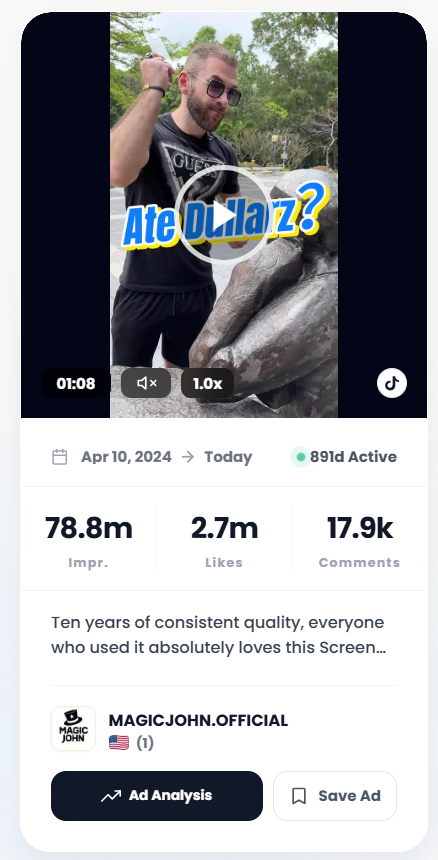
A short video has to earn the time it takes to tell its story. The first 3 seconds are a firm creative constraint: completion rates and early engagement influence distribution, and losing viewers in those opening frames means less organic amplification and a higher cost per paid result.
Give those seconds to something worth watching. Show the product working, use a bold visual, or open with an unexpected statement. Branding and background can follow.
What happens after the opening is just as deliberate. A 15-to-30-second reel has room for a problem, a solution, and the relief or satisfaction of seeing the problem resolved. A still image can communicate a benefit; video lets the viewer follow it through. That sequence builds a connection with the brand as well as an intention to buy.
When editing short-form video ads, check the following:
- Put the problem before the product. Conflict or contrast helps the viewer recognize what needs solving.
- Watch with the sound off. Captions and on-screen text should still carry the message.
- Remove frames that do not advance the story.
- Keep the footage at home in the feed. Informal, creator-style work often performs better than polished production.
- End with one visible CTA, and use the voiceover to ask for the same action.
3. User-Generated Content (UGC) Ads: The Trust Multiplier
BigCommerce reports that customer-created content converted 6.73 times better than brand-created content in early 2026. That gap helps explain why performance marketers are moving budget toward customers and creators.
The appeal of UGC ads is easier to understand from the buyer’s side. A studio product shot can look convincing without answering a personal question: does this work for someone like me? A person demonstrating the product on a phone camera offers a different kind of reassurance. Another customer’s approval provides social proof and makes the purchase feel less risky.
Reviews, unboxing clips, selfie testimonials, and creator demonstrations all bring that familiar voice into an ad. Audiences recognize these forms from organic content. In a feed full of polished advertising, UGC and creator-led assets tend to convert better because they reflect experiences buyers can relate to.
Give this material a primary place in testing. Find the voices that resonate, then put media spend behind those assets. Paid distribution extends the reach of what organic audiences already trust.
4. Carousel and Collection Ads: The Virtual Storefront
Carousel ads leave shoppers a choice of where to go next. Each card can contain an image or video and link to its own destination. Use the sequence to show a product line, explain features, or tell a story across several cards.
The catalog should guide the order. Each swipe can then move the shopper through the selection toward a purchase. BigCommerce research finds stronger engagement for multi-asset formats than for single-image placements, particularly among ecommerce brands with large catalogs.
Keeping the cards accurate is part of the setup. An integration with Shopify can sync current inventory, live pricing, and availability automatically, so those details do not need a manual creative refresh.
Collection ads address the next step in mobile browsing. A tap opens a full-screen instant experience within the platform. There is no separate browser page to wait for, removing loading friction that can cost a conversion. For retargeting, build the selection around products the shopper has already viewed.
5. AI-Generated and Dynamic Creative Ads: Scaling Personalization
Producing enough material to test is a substantial job for a small team without a dedicated designer. Generative AI can turn days of work on headline variants, visual compositions, and copy angles into hours. More versions bring more test data and faster iteration.
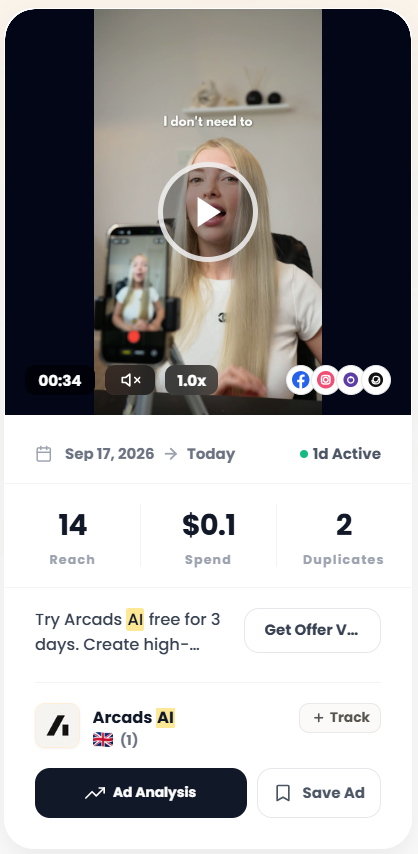
AI-assisted production is becoming routine for performance marketers with high creative demands. Some 75% of social marketers plan to implement generative AI tools for customer experience.
Making the assets and deciding who sees them are separate tasks. Dynamic creative optimization (DCO) handles the second at the moment of impression. It draws headlines, images, CTAs, and offers from an approved library, then assembles the combination most likely to work for that individual.
Without that matching process, someone has to select the creative for each audience and build the combinations. DCO allows a single campaign to serve hundreds of variations without that additional manual work. AI supplies the volume; dynamic optimization selects the version to deliver. Together, they support personalization beyond the limits of a fixed campaign structure.
Key Takeaways: Building a 2026 Social Ad Strategy
Plan for the full customer journey when choosing among these types of social media advertising. The formats have different roles:
| Role in the journey | Format |
|---|---|
| Build brand recognition | Static images |
| Create awareness | Short-form video |
| Close the sale | Carousel and collection ads |
Relying on one format leaves parts of the journey uncovered and revenue behind. Authentic creative deserves a leading role throughout the plan, while AI can help with production volume and personalized delivery.
The team still has to choose the audience, offer, and funnel stage. In 2026, marketers who keep combining format diversity, credible creative, and competitive intelligence will outperform those relying on budget size alone.
The Bottom Line: Data-Driven Creative is the Only Edge
Small bid increases cannot compensate for weak creative. Across Meta, TikTok, and YouTube, delivery systems put more weight on creative performance than on incremental bid changes. Click-through rate, watch time, and save rate affect cost efficiency and reach. Strong, relevant social media ads earn cheaper impressions and wider distribution; weak ads keep consuming budget despite adjustments to the bid.
Knowing the five formats is a start. Acting on the data faster than competitors requires a view beyond your own campaigns. Competitor intelligence shows where other brands allocate spend, which formats they scale, the audiences they target, and the messaging angles and offers they use.
Track those choices alongside creative trends gaining attention in your category. This adds context to your standard reporting and can expose a market shift before your own results do. It gives you a chance to act while the trend develops, instead of responding after others have moved.
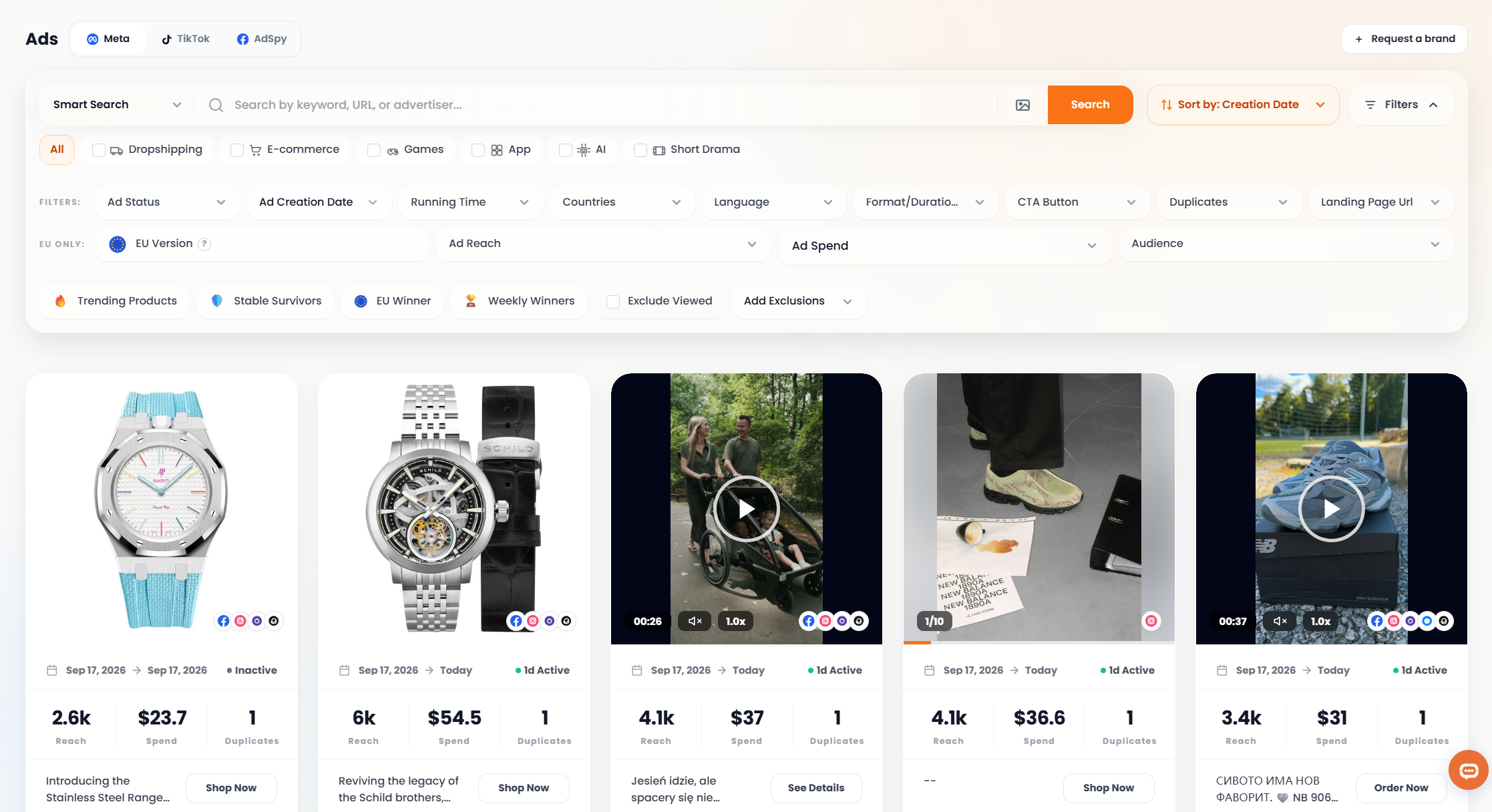
PrimeSpy can become part of that creative research routine. When reviewing competitor ads, look at the decisions behind each execution: how quickly the product appears, which customer problem leads the message, what proof supports the offer, and how the ad asks the viewer to respond. These details connect what you see in competing campaigns to the format choices covered in this article.
Bring those observations into your next creative brief. A product demonstration might suggest an opening worth testing in a reel. The way an advertiser uses customer reviews could inform a UGC concept, while a sequence of product cards could offer a useful reference for organizing your own carousel. Treat each observation as a starting point for a test, then use your campaign results to decide what deserves more investment.
Make competitive monitoring a regular part of planning. Start auditing your competitive ad landscape with PrimeSpy, and use the findings to guide the messages, formats, and offers you test in your next campaign.